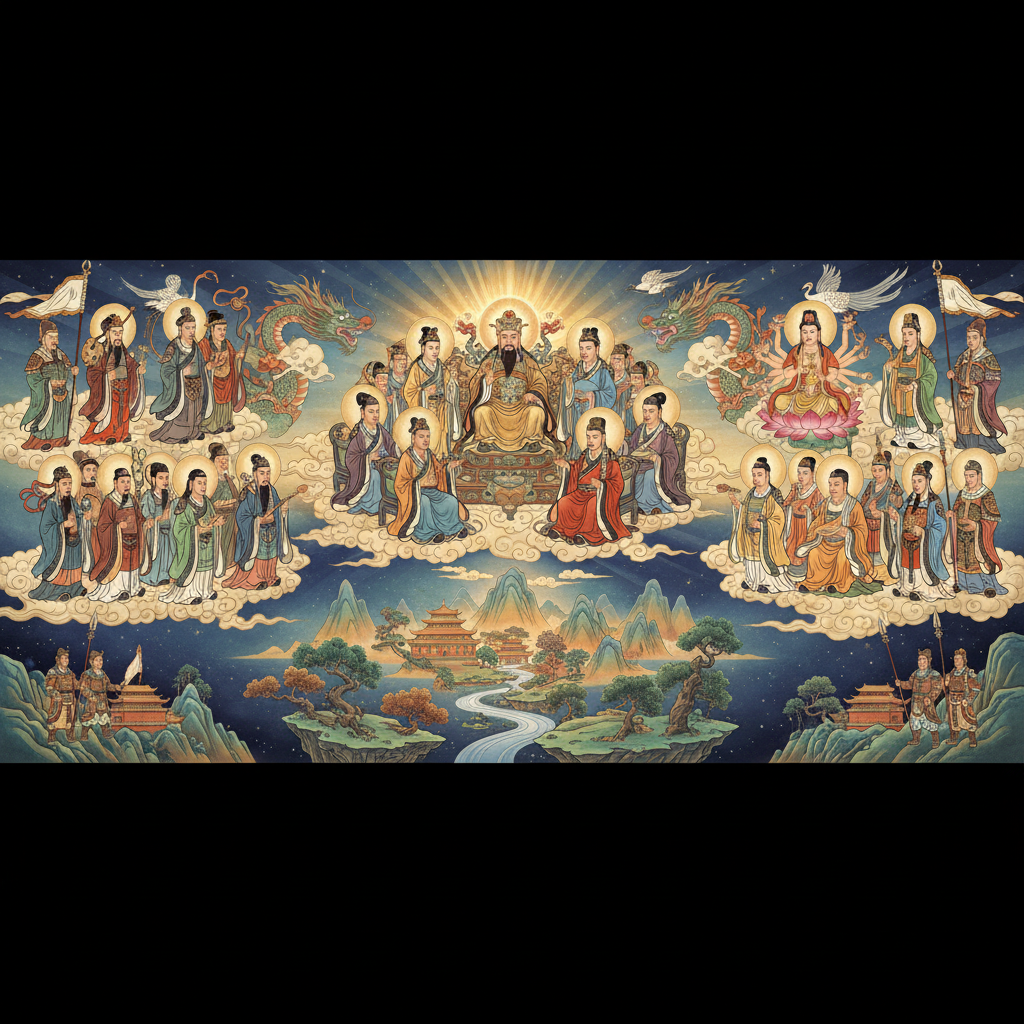
The Foundations of Chinese Mythology: An Overview
Chinese mythology is a profound and intricate belief system that interweaves the principles of Daoism, Buddhism, and folk traditions. The pantheon of Chinese deities and immortals reflects the diverse cultural fabric of China, with roots that stretch back millennia. The immortal beings, regarded as saints or enlightened ones, serve not only as protectors of civilization but also as symbols of moral integrity and spiritual enlightenment.
In Chinese cosmology, humans, gods, and nature exist within a single continuum. This interconnectedness forms the foundation of various myths, emphasizing harmony and balance as essential to existence. Daoism, for instance, promotes the pursuit of balance through the understanding of Dao, or "the Way," and encourages followers to cultivate virtues that align with the natural order.
Significant Deities in Daoism
The Three Pure Ones
In the rich tapestry of Daoist beliefs, the Three Pure Ones hold a special place. They are considered the highest deities in the Daoist pantheon and represent different aspects of creation and universal ethics.
- Laozi: The father figure and attributed author of the "Tao Te Ching," Laozi signifies wisdom and enlightenment, symbolizing the principle of returning to simplicity and nature.
- 元始天尊 (Yuan Shi Tian Zun): Known as the "Primeval Lord of Heaven," he is often considered the ultimate source of the universe, embodying the concept of primordial chaos from which all creation emerges.
- 道德天尊 (Dao De Tian Zun): Also known as the "Lord of the Way and its Virtue," he symbolizes moral clarity and ethical living, guiding followers on their spiritual journey.
These deities are not merely anthropomorphic figures; they also personify abstract concepts, reflecting the philosophical underpinnings of Daoism.
Immortals of Chinese Tradition
The Eight Immortals
One of the most celebrated groups in Chinese folklore is the Eight Immortals, known as the "Ba Xian." Each immortal embodies different virtues and allegorical lessons that resonate deeply with the Chinese value system.
- Zhang Guo Lao: Often depicted riding a donkey regardless of age, he represents longevity and the idea of enjoying life's journey.
- Lu Dongbin: A scholar and sword-wielding hero, he embodies knowledge and the power of wisdom.
- He Xiangu: The only female immortal, she symbolizes purity and the nurturing side of virtue.
The Eight Immortals are often featured in art and literature, serving as cultural icons who inspire moral stories and impart values across generations. Through festivals and celebratory parades, they continue to play a vibrant role in Chinese culture.
Buddhist Influences on Chinese Deities
Compassionate Bodhisattvas
Buddhism introduced new deities and spiritual hierarchies to the Chinese pantheon, enriching the cultural landscape. A notable figure is Guanyin (Avalokiteshvara), the Bodhisattva of Compassion, who epitomizes mercy and benevolence. She transcends the boundaries of gender, often depicted in both male and female forms to emphasize her universal compassion.
Guanyin is revered in various ways throughout China, manifesting in different regional practices and local beliefs. Many temples and shrines dedicated to her serve as sanctuaries for those seeking solace and divine intervention. This adaptability has allowed Guanyin to integrate seamlessly with local traditions while reinforcing core Buddhist tenets.
The Role of Mythology in Contemporary China
Preserving Cultural Heritage
Even in modern times, Chinese deities and myths continue to hold cultural significance. Festivals, art, and literature draw upon these rich narratives, reinforcing community identity and continuity. The celebration of Lunar New Year, for instance, often includes honoring deities like the Kitchen God and the God of Wealth, capitalizing on traditional beliefs to foster a sense of unity among families and communities.
Moreover, there’s an increasing interest in exploring these myths through new mediums, such as films and graphic novels, which reinterpret ancient tales for contemporary audiences. This revitalization not only preserves cultural heritage but also serves as a bridge connecting the past with future generations.
Conclusion: The Ever-Evolving Pantheon
The mythos surrounding Chinese deities and immortals exemplifies a profound and dynamic interplay of beliefs and ideals. From Daoist philosophy to Buddhist compassion, these figures reflect the moral, ethical, and societal foundations of Chinese culture. As this rich tapestry of mythology continues to evolve, it remains a vital element of identity for many Chinese people, allowing them to navigate the complexities of modern life while remaining grounded in their historical and spiritual origins. The exploration of these deities and their stories is not merely an academic pursuit; it is a journey into the heart of Chinese culture and its enduring legacy.