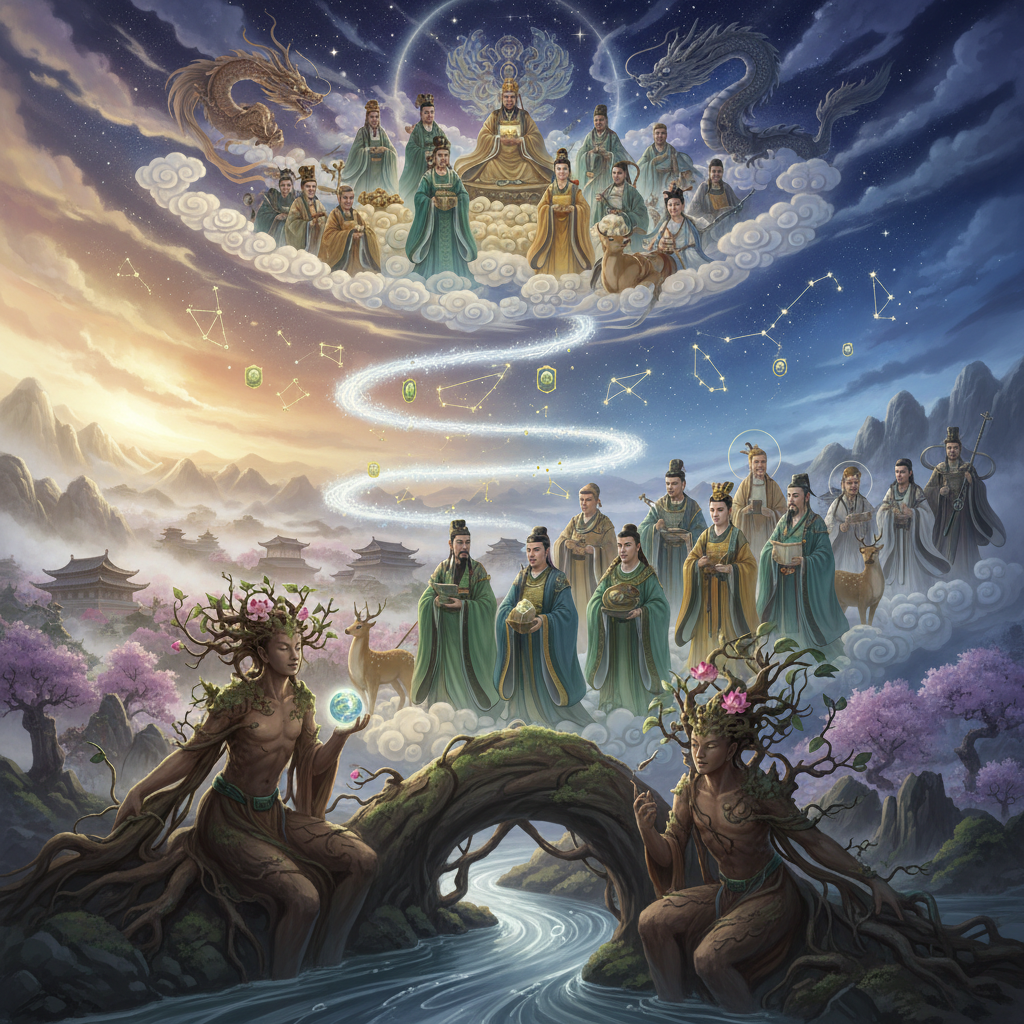
Introduction to Chinese Nature Spirits
In the intricate tapestry of Chinese mythology, nature spirits hold a significant place, representing various aspects of the natural world. These deities are often revered in both Daoist and Buddhist traditions, embodying the equilibrium between humanity and the environment. From the serene mountains to the flowing rivers, these spirits symbolize the rich cultural heritage of China and its profound relationship with nature.
Historical Context of Nature Spirits in Chinese Culture
The concept of nature spirits in China can be traced back to ancient animistic beliefs, which predate recorded history. Early Chinese society viewed the natural world as infused with spiritual significance, with various elements—such as mountains, rivers, and even stones—deemed sacred. Over time, these beliefs evolved, intertwining with Daoism and Buddhism, which further enriched the pantheon of nature deities.
Daoism, founded in the 4th century BCE by Laozi, emphasizes harmony with nature and the cosmos. The yin-yang philosophy embodies the balance of opposites, which is reflected in the reverence for nature spirits who are seen as guardians of this balance. Through rituals and prayers, practitioners seek to cultivate a connection with these deities, nurturing both spiritual and environmental awareness.
Major Nature Spirits in Chinese Mythology
The Four Great Spirits
In traditional Chinese thought, the Four Great Spirits (also known as the Four Pillars of Heaven) are vital figures symbolizing cardinal directions and elemental forces. These spirits are:
- Qinglong (Azure Dragon) - Representing the East, associated with spring and wood.
- Baihu (White Tiger) - Representing the West, linked to autumn and metal.
- Zhuque (Vermilion Bird) - Representing the South, connected to summer and fire.
- Xuanwu (Black Tortoise) - Representing the North, symbolizing winter and water.
These spirits are not only protectors of their respective directions but also play crucial roles in maintaining the balance of nature. Their representations often appear in art, architecture, and festival celebrations, showcasing their enduring importance in Chinese culture.
The Mountain Spirits
Mountains hold a revered status in Chinese cosmology, often personified as deities that govern their respective regions. An example is Guanyin (Avalokiteshvara), the Goddess of Mercy, who is closely associated with Mount Putuo. As a nature spirit, she embodies compassion and is invoked for protection by travelers and those seeking solace in nature.
Furthermore, Yuhuang Dadi (Jade Emperor), although a prominent figure in the Daoist pantheon, also embodies earth and sky aspects, representing the protector of natural order at higher altitudes and celestial spaces.
Cultural Significance of Nature Spirits
The worship of nature spirits varies across regions in China, reflecting local customs and beliefs. Temples dedicated to these spirits can be found in mountainous regions, forests, and along rivers, serving as places of reverence and meditation. Rituals often involve offerings, dances, and festivals, enhancing community bonds while promoting respect for the environment.
In modern times, these spirits have influenced not only religious practices but also art, literature, and popular culture. The reverence for nature and its spirits encourages a dialogue about environmental preservation, as communities recognize the ecological wisdom embedded in these age-old narratives.
Integrating Nature Spirits into Modern Life
In today's fast-paced urban environments, the significance of nature spirits continues to resonate. Many people engage in traditional practices, such as visiting temples or undertaking pilgrimages to sacred sites, as a way to reconnect with nature and their cultural roots. Moreover, the increasing global emphasis on sustainability aligns with the fundamental Daoist belief in maintaining balance with the natural world.
The revival of interest in classical Chinese literature and philosophy has also sparked curiosity about nature spirits among the younger generations. This rediscovery has encouraged a modern reinterpretation of traditional values, fostering a renewed appreciation for the natural world in a rapidly changing environment.
Conclusion: The Enduring Legacy of Nature Spirits in Chinese Mythology
The nature spirits of Chinese mythology represent a profound understanding of humanity's interconnectedness with the environment. Their legacy endures as a source of wisdom and cultural identity, reminding us to seek harmony between our lives and the natural world. By celebrating these deities, we not only honor the past but also pave the way for a sustainable future rooted in mutual respect for the earth and its elements.