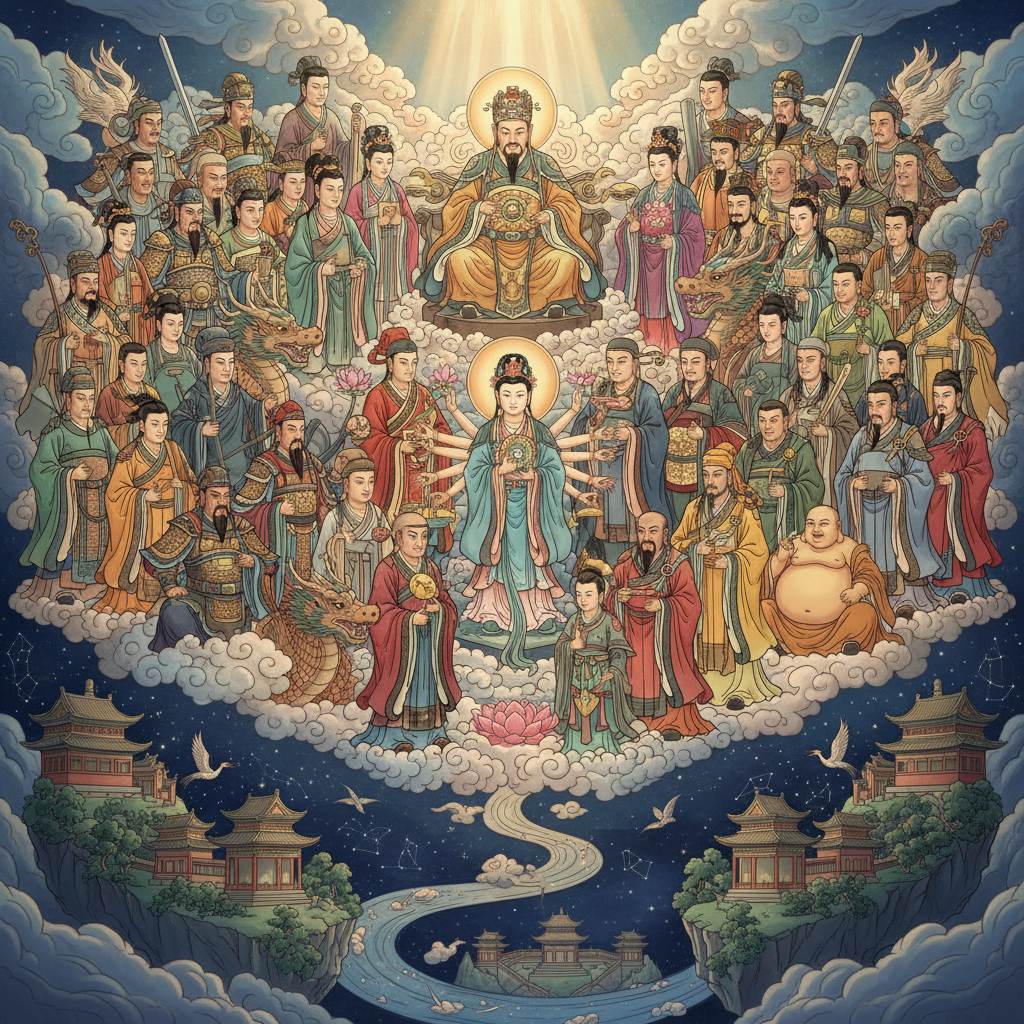
Introduction to Chinese Deities and Immortals
Chinese religious culture is unparalleled in its rich tapestry of gods, immortals, and mythological figures, woven intricately through Daoism, Buddhism, and folk beliefs. Unlike monotheistic religions, Chinese spiritual traditions embrace a pantheon where deities often serve specialized roles, acting as guardians, benefactors, or symbols of cosmic principles. Understanding this pantheon requires exploring both historical contexts and cultural nuances that have evolved over millennia, reflecting China's complex society and philosophical heritage.
The Foundation: Daoist Deities and Immortals
Daoism, or Taoism, is one of the oldest native spiritual systems in China, emphasizing harmony with the Dao—the ultimate source and principle underlying the universe. Central to Daoist cosmology are its deities and xian (immortals), who embody immortality, spiritual cultivation, and cosmic balance.
Prominent among the Daoist pantheon are the Eight Immortals (Ba Xian), legendary figures often depicted in folklore, art, and religious ritual. Each immortal represents a unique virtue or power, such as healing or longevity, and they are celebrated as exemplars of transcending mortal limitations. Another critical figure is the Three Pure Ones (Sanqing), the highest deities in Daoism symbolizing the pure manifestation of the Dao across different cosmic stages.
Daoist temples historically functioned as both spiritual centers and places for alchemical cultivation, where devotees sought not just divine favor but also personal transformation aligned with Daoist philosophies. The prioritization of balance, naturalness, and inner cultivation influences how Daoist deities are revered—not merely as gods to petition, but as guides for achieving harmony with nature and the cosmos.
Buddhist Integration and the Chinese Buddhist Pantheon
Buddhism entered China from India around the first century CE and gradually merged with local beliefs, resulting in a distinct Chinese Buddhist pantheon that often overlaps with Daoist figures. Chinese Buddhism adapted native gods as protectors of the Dharma (Buddhist teachings), assigning them roles within sutras and religious practices.
Guanyin (Avalokiteshvara), the Bodhisattva of Compassion, is arguably the most beloved figure in this pantheon, embodying mercy and salvation. Guanyin’s popularity extends beyond religious devotion; the deity symbolizes kindness and maternal care, resonating deeply within Chinese culture and art. Another important figure is the Medicine Buddha (Yao Shi Fo), revered for healing both physical and spiritual ailments.
In Chinese Buddhist temples, statues and iconography combine Indian symbolism with Chinese artistic styles, reflecting the syncretic nature of religious practice. The integration of Buddhist deities into Daoist cosmology further highlights the fluidity between these traditions, illustrating the adaptive and inclusive spiritual landscape of China.
The Cultural Significance of Regional Gods and Folk Spirits
Beyond the major Daoist and Buddhist deities, numerous regional gods and spirits play vital roles in local communities. These figures, often referred to as "shen" (神), embody natural elements, ancestors, or legendary heroes. Examples include river gods, mountain spirits, and city guardians who protect specific locales and their inhabitants.
The worship of these deities reveals much about Chinese social and cultural values, emphasizing respect for nature, community, and ancestral heritage. City gods (Chenghuang) are particularly significant, acting as divine magistrates who maintain order in both the spiritual and civic domains. The relationship between people and these gods is reciprocal, involving offerings, festivals, and rituals intended to ensure harmony and prosperity.
Folk religious practices, often overlapping with Daoism and Buddhism, reinforce social cohesion and cultural identity by linking abstract cosmic principles to everyday life. This regional diversity of deities underscores the layered complexity of Chinese spirituality, where local customs coexist alongside universal religious narratives.
Symbolism and Representation in Art and Ritual
Chinese deities and immortals are richly represented in visual arts, theater, and ritual practices, each symbolic element conveying deeper philosophical meanings. The iconography of gods often includes animals, colors, and tools emblematic of their attributes. For instance, the Yellow Emperor—a legendary ancestral figure and god—is associated with dragon symbolism and the color yellow, signifying centrality and earth element in Chinese cosmology.
Rituals performed at temples are not only acts of devotion but also expressions of cosmological order. Incense burning, chanting, and offering food serve as means to communicate with the divine, sustain spiritual connections, and renew cosmic harmony. Seasonal festivals like Qingming (Tomb-Sweeping Day) and the Lunar New Year incorporate veneration of ancestors and local gods, reflecting the inseparability of religious and social life in China.
Conclusion: The Enduring Legacy of Chinese Mythical Pantheon
The pantheon of Chinese deities and immortals, rooted in Daoism, Buddhism, and folk traditions, manifests a dynamic spiritual ecosystem that has shaped China's cultural identity for thousands of years. It melds philosophy, mythology, and everyday practice into a living tradition, continuing to inspire literature, art, and religious life. Through understanding these divine figures and their cultural roles, one gains deeper insight into how the Chinese worldview harmonizes humanity with nature, history, and the cosmos itself.