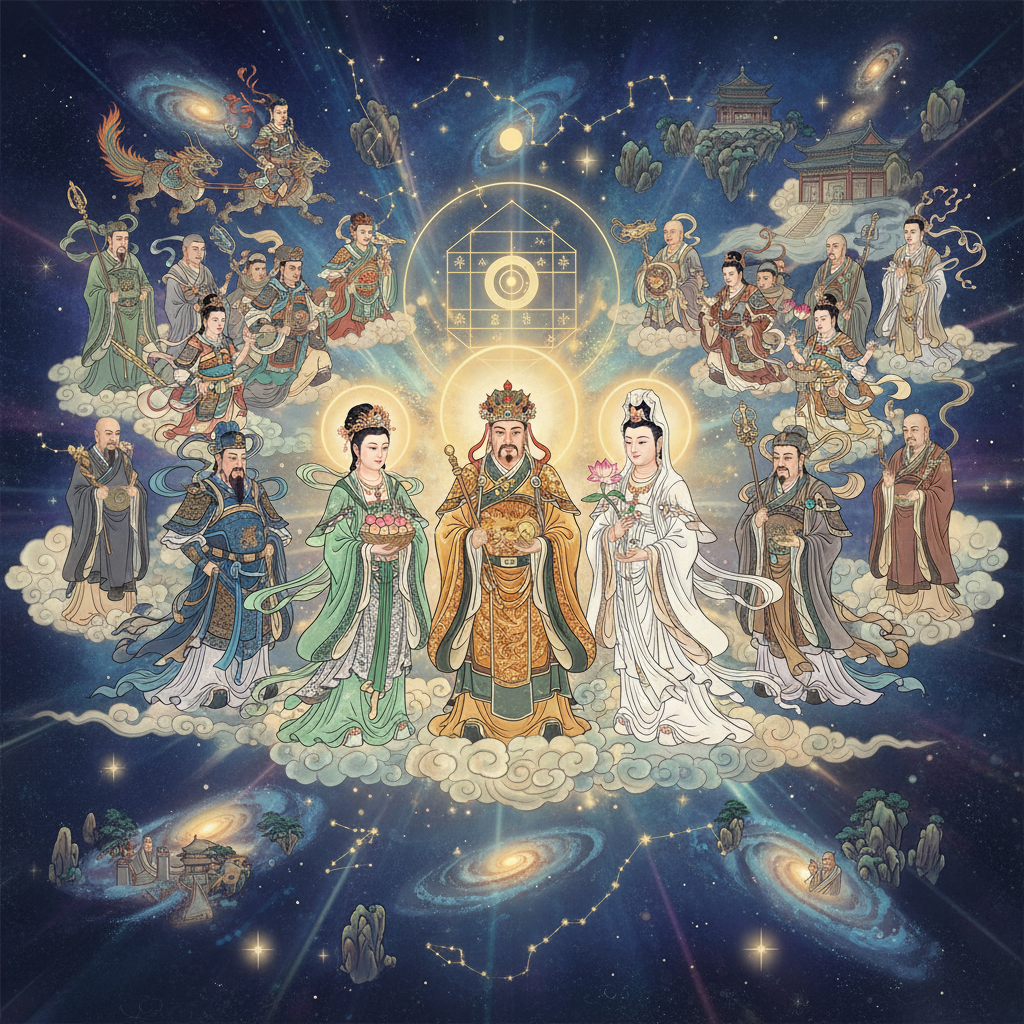
Introduction to Chinese Star Gods: Celestial Guardians and Guides
In Chinese mythology, astronomy and spirituality intertwine through the veneration of star gods—celestial beings embodying stars, constellations, and astral phenomena. These deities are integral to Daoist and Buddhist cosmology, acting as guardians of fate, guides to immortality, and controllers of cosmic order. Rooted in ancient Chinese star worship, their significance extends beyond mythology into cultural rituals that persist to this day. This article delves into the origins, roles, and fascinating stories behind these star gods in Chinese religious traditions.
Historical Context: From Ancient Astronomy to Divine Personification
Chinese civilization has one of the oldest recorded traditions of astronomy, dating back over 3,000 years to the Shang Dynasty (c.1600–1046 BCE). Early Chinese star maps and celestial records linked specific stars and constellations to natural phenomena and human destiny. Over centuries, Daoist and later Buddhist practices merged this celestial knowledge with spiritual beliefs, personifying key stars as gods and immortals. These figures often represent moral qualities, cosmic forces, or aspects of longevity and prosperity, reflecting a worldview where heaven, earth, and humanity form a harmonious triad.
Prominent Star Deities in Daoism
Within Daoism, the “Big Dipper” (Bei Dou 北斗) constellation holds paramount importance, with star gods assigned to each of its seven stars. Often referred to collectively as the Northern Dipper Gods, they oversee life and death, fate, and cosmic balance. Among them:
- Doumu: Known as the Mother of the Big Dipper, Doumu is a powerful goddess associated with fertility, protection, and salvation. She is frequently invoked in rituals seeking deliverance from misfortune.
- Sanxing (Three Stars): Fu, Lu, and Shou—Stars of Blessing, Prosperity, and Longevity—are popular household deities symbolizing ideal life aspirations, deeply entrenched in Daoist-inspired folk religion.
- Taiyi Zhenren: A high Daoist immortal linked with the North Star (Polaris), representing cosmic stability and spiritual governance.
These star gods operate as mediators between the human and celestial realms, guiding souls and influencing earthly affairs through their celestial power.
Buddhist Integration: The Star Deities in Chinese Buddhism
Chinese Buddhism integrated many indigenous astral deities, merging them with traditional Buddhist cosmology. Star gods often appear as protective deities guarding sacred texts or temples. For example:
- Viśvāmitra (Ten Kings of Hell association): Some star-related deities overlap with Buddhist judges who oversee karmic retribution in the afterlife.
- The Twenty-Eight Mansions (Xiu): Although originally an astrological system, these lunar mansions are sometimes personified within Buddhist rites, connecting cosmic cycles with the path to enlightenment.
This syncretism reflects Chinese Buddhism’s adaptability, where astral deities gain roles as dharmapalas (protectors of the dharma) or guides in samsara’s labyrinth.
Cultural Significance and Ritual Practices
Star gods have been woven into daily Chinese life, especially during festivals and rituals aimed at aligning human endeavors with celestial rhythms. For example:
- Birthday Celebrations of Star Gods: Specific days are dedicated to honoring star deities, involving offerings, incense, and sometimes community performances, reinforcing social bonds and cosmic harmony.
- Astrological Consultations: Daoist priests consult the positions of star gods when determining auspicious dates for marriages, travel, and official appointments.
- Longevity and Immortality Practices: Certain immortals associated with celestial bodies are believed to grant long life or spiritual ascension, influencing Daoist meditation and alchemical rites.
These practices underscore a holistic worldview where stars are not merely physical bodies but active cosmic participants in human fate.
Interesting Details: Symbolism and Artistic Depictions
In Chinese art and iconography, star gods are richly symbolized: the Big Dipper is often rendered as a ladle or spoon, symbolizing its ability to ‘scoop’ souls or dispense blessings. The stars Fu, Lu, and Shou are usually depicted as elderly men with distinct attributes—Fu holds a scroll or child, Lu a scepter or official’s hat, and Shou a staff with a peach, representing longevity. Their imagery permeates household decorations, temple murals, and even modern media, illustrating their enduring cultural presence.
Moreover, the star gods’ relationship with astrology often appears in classical literature and folklore, where star alignments presage historical events or individual destinies—a testament to their embeddedness in the Chinese psyche for millennia.
Conclusion: The Everlasting Influence of Chinese Star Gods
Chinese star gods represent a profound fusion of astronomy, religion, and culture. From their early origins as astral symbols to their complex roles as deities and immortals, these figures continue to inspire spiritual devotion and cultural expression. Through Daoist and Buddhist interpretations, the star gods bridge the cosmos and the human realm, reminding adherents of the celestial forces shaping life’s unfolding. As scholarly interest and popular fascination grow, these luminous guardians of the night sky remain shining icons of China’s vast spiritual heritage.