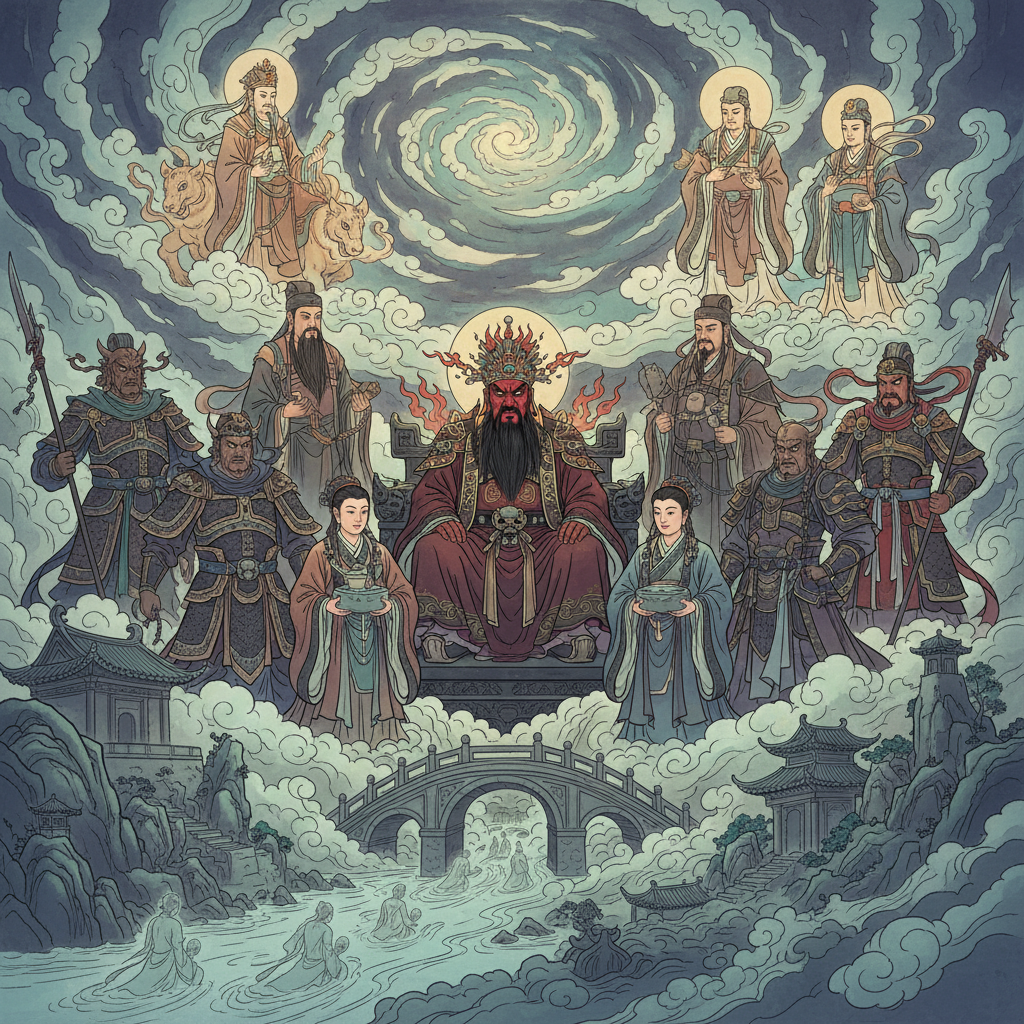
Introduction to the Chinese Underworld: A Complex Spiritual Realm
In Chinese cosmology, the concept of the underworld—known in Chinese as Diyu (地狱)—embodies a rich tapestry of spiritual beliefs about death, judgment, and the afterlife. Unlike Western conceptions of hell as a place solely of eternal damnation, the Chinese underworld is administered by a sophisticated bureaucracy of deities and immortals who oversee a system of moral adjudication and karmic retribution. Rooted deeply in Daoist and Buddhist religious thought and popular folk belief, this spiritual realm reflects profound concerns about morality, sin, and cosmic justice.
Yama: The King of the Underworld and God of Retribution
Central to the Chinese underworld pantheon is Yama (Yanluo Wang, 閻羅王), a deity imported from Indian Buddhist tradition but extensively sinified within Chinese culture. Yama is considered the King of Hell, ruling over the various courts of Diyu where souls are judged according to their earthly deeds. Unlike the Western Devil, Yama is not a malevolent figure but a stern judge administering cosmic justice impartially. He presides over ten courts, each responsible for purifying the soul through defined punishments or penances reflective of one’s karma, before reincarnation or ascension is permitted.
Interestingly, Yama’s role illuminates the syncretic nature of Chinese spirituality, where Buddhist elements harmonize with indigenous Daoist and folk beliefs, creating a uniquely Chinese vision of the afterlife.
The Ten Judges and the Underworld Bureaucracy
The Chinese underworld is often described as a sprawling celestial bureaucracy resembling imperial administration—a reflection of earthly governance projected onto the afterlife. Alongside Yama, there are ten Judges or Kings of Hell, sometimes collectively referred to as the Ten Yama Kings. Each king oversees a specific court tasked with judging particular offenses and meting out corresponding punishments.
This intricate system mirrors traditional Chinese values emphasizing order, justice, and responsibility. Punishments are not eternal but corrective, and souls often undergo various cycles of suffering before being reborn. This cyclical concept of death and rebirth aligns with both Buddhist samsara and Daoist immortality pursuits.
Meng Po: The Lady of Forgetfulness and Reincarnation
A unique figure within the underworld narrative is Meng Po (孟婆), often depicted as an old woman who serves a critical role in the reincarnation process. Her function is to administer the “Five-Flavored Soup” (五味汤) to souls before their next birth. This potion erases memories of past lives, ensuring that souls forget their previous existence and sufferings, allowing them a fresh start in the mortal world.
Meng Po’s role is both poetic and tragic—it represents a spiritual amnesia that enables the cycle of life to continue unburdened. She underscores the Daoist acceptance of impermanence and detachment from worldly afflictions.
Dìzhǔ: The Lord of the Earth and Death in Folk Belief
In addition to the more formal Daoist and Buddhist figures, Chinese folk religion venerates Dìzhǔ (地主), the Earth Deity who holds sway over the land of the dead. Often seen as the local Guardian of the Tomb, Dìzhǔ’s duties include protecting ancestral graves and ensuring the spirits of the dead are respected and appeased.
The veneration of Dìzhǔ reflects the strong Confucian emphasis on ancestor worship and family continuity. Proper tomb maintenance and rituals dedicated to the Earth Deity ensure peace for both spirits and their living descendants, blending notions of earthly respect with spiritual responsibility.
Cultural Significance and Contemporary Influence
The rich tapestry of underworld deities in Chinese culture continues to shape popular understandings of morality, death, and the afterlife. Festivals such as the Ghost Festival (中元节) honor the spirits of the deceased, inviting offerings and rituals intended to ease their suffering in Diyu and ensure protection from malevolent ghosts. This annual event is heavily influenced by the mythology of underworld rulers and their courts.
Moreover, these deities and stories have inspired countless works of art, literature, opera, and film within Chinese culture. Their vivid portrayals emphasize themes of justice, compassion, and redemption—values that transcend religious boundaries and offer moral guidance in everyday life.
Conclusion: The Enduring Legacy of Chinese Underworld Deities
The pantheon of Chinese underworld deities represents a dynamic interplay between Daoist ideals, Buddhist doctrine, and folk traditions. Through figures like Yama, Meng Po, and the Ten Judges, these spiritual overseers provide a detailed moral framework governing life, death, and reincarnation. More than fearsome agents of punishment, they illustrate a complex worldview where cosmic balance, ethical behavior, and spiritual transformation converge. Understanding these deities offers valuable insight into Chinese cultural psyche and the universal human quest to comprehend the mysteries of death and what lies beyond.