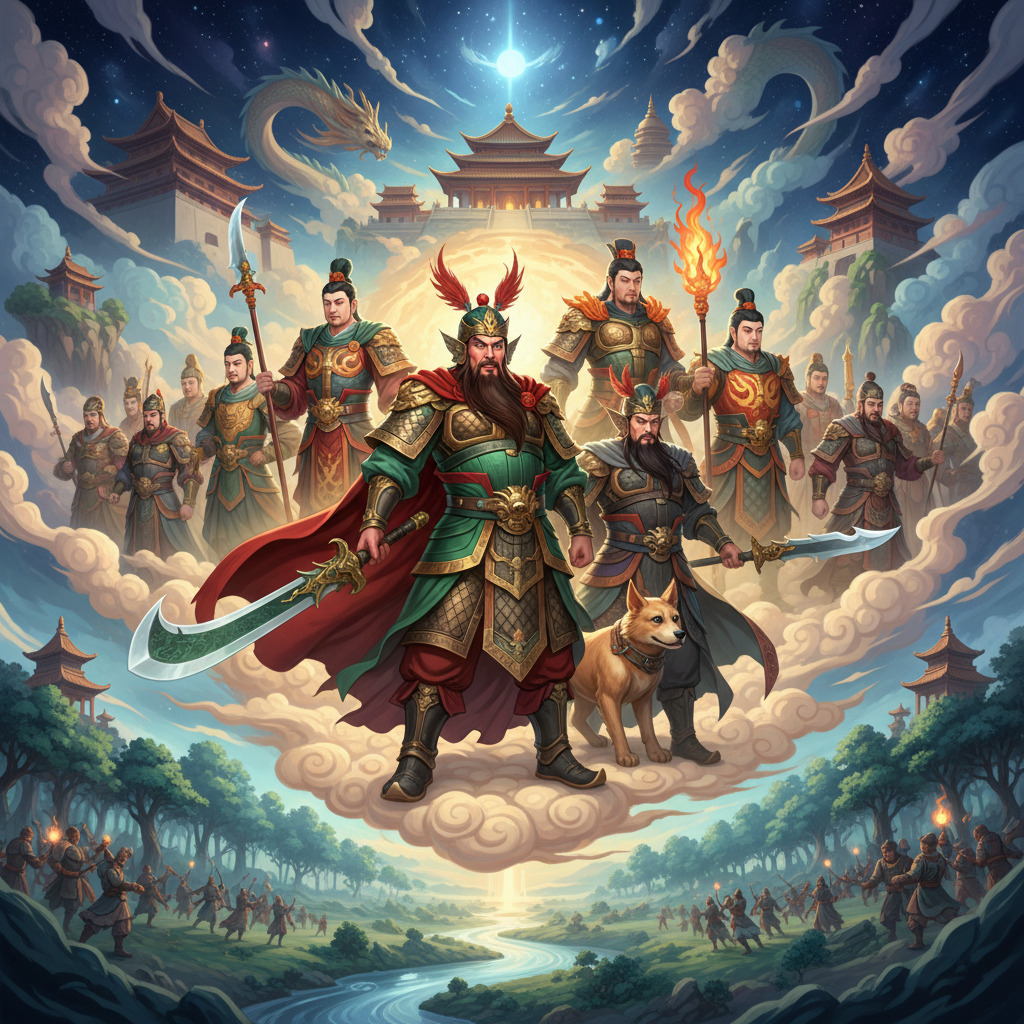
Introduction to Chinese War Gods
In the vast landscape of Chinese mythology, war gods hold a significant place, symbolizing not only martial prowess but also the broader themes of protection, justice, and morality. These deities have emerged from historical contexts influenced by Daoism, Buddhism, and Confucianism, interweaving with the cultural fabric of Chinese society. Understanding these divine warriors offers insight into the values and beliefs that have shaped Chinese civilization for centuries.
Historical Context of Chinese War Deities
War gods in Chinese tradition often arose during tumultuous periods marked by conflict, imperial expansion, and social upheaval. With the rise of dynasty after dynasty, the need for divine intervention in warfare became paramount. In ancient texts, these gods are portrayed as generals or heroic figures, often backed by folklore that exaggerates their powers and exploits.
One of the most celebrated war deities is Guan Yu, a legendary general from the late Han dynasty who became deified after his death. His story is emblazoned in the "Romance of the Three Kingdoms," effectively melding history with myth, and his veneration grew as his qualities of loyalty and righteousness resonated with the Chinese populace. Guan Yu is often depicted in full battle regalia, wielding his iconic green dragon blade, and represents the moral compass for soldiers and civilians alike.
Guan Yu: The God of War and Loyalty
Guan Yu, also known as Guan Di or the Lord Guan, is perhaps the most revered war god in the Chinese pantheon. His legacy extends beyond military might—he is also seen as a protector of the weak and an embodiment of justice. Temples dedicated to Guan Yu are prevalent across China and in Chinese communities worldwide, where he is worshipped by both warriors and merchants, symbolizing trustworthiness in business dealings.
His association with wealth and protection has led to him being incorporated into the realm of prosperity. Rituals are performed to invoke his blessings for success, peace, and protection. In contemporary contexts, he's often reimagined in literature, cinema, and even video games, solidifying his role as an enduring cultural icon.
Other Notable War Gods in Daoist and Buddhist Belief
While Guan Yu stands prominently, other war gods also play crucial roles within the Daoist and Buddhist pantheon. For instance, Zhong Kui, known as the King of Ghosts, combines martial prowess with supernatural abilities. In folklore, he is said to have defeated powerful demons, earning his position as a protector against evil and a guide for the wandering souls. His imagery is often displayed in Chinese New Year decorations, invoking safety for households during the year.
Another significant figure is the Bodhisattva Ksitigarbha, who, while primarily known for his vows to rescue beings from suffering in hell, is often called upon for protection during war. His serene demeanor coupled with his courageous nature symbolizes mercy in times of strife, reminding followers that compassion is essential during conflict.
Cultural Significance and Modern Interpretations
The cultural significance of Chinese war gods extends far beyond ritual worship. They embody principles such as loyalty, bravery, and moral integrity. During conflicts, ordinary people and soldiers alike often invoke these deities, creating a psychological bond between the tangible and the ethereal.
In contemporary Chinese culture, the perception of war deities has evolved, embracing new narratives that marry tradition with modernity. Guan Yu, for example, has transcended his historical roots to become a symbol of business ethics, inspiring contemporary corporate values. His image is found in offices and homes, serving as tangible reminders of integrity in professional and personal pursuits.
Conclusion: The Legacy of Chinese War Gods
As guardians of morality and symbols of invincible spirits, Chinese war gods endure within the cultural psyche. Their origins rooted in ancient battles still resonate today, serving as reminders of the complexities of conflict and virtue. These deities invite us to reflect on the intersection of faith, history, and identity, revealing a rich tradition that continues to thrive in various adaptations across media.
In understanding Chinese war gods, we grasp not just their individual narratives but also the deeper values they represent, bridging the realms of the sacred and the historical, and inviting us to explore the profound tapestry of Chinese mythology.