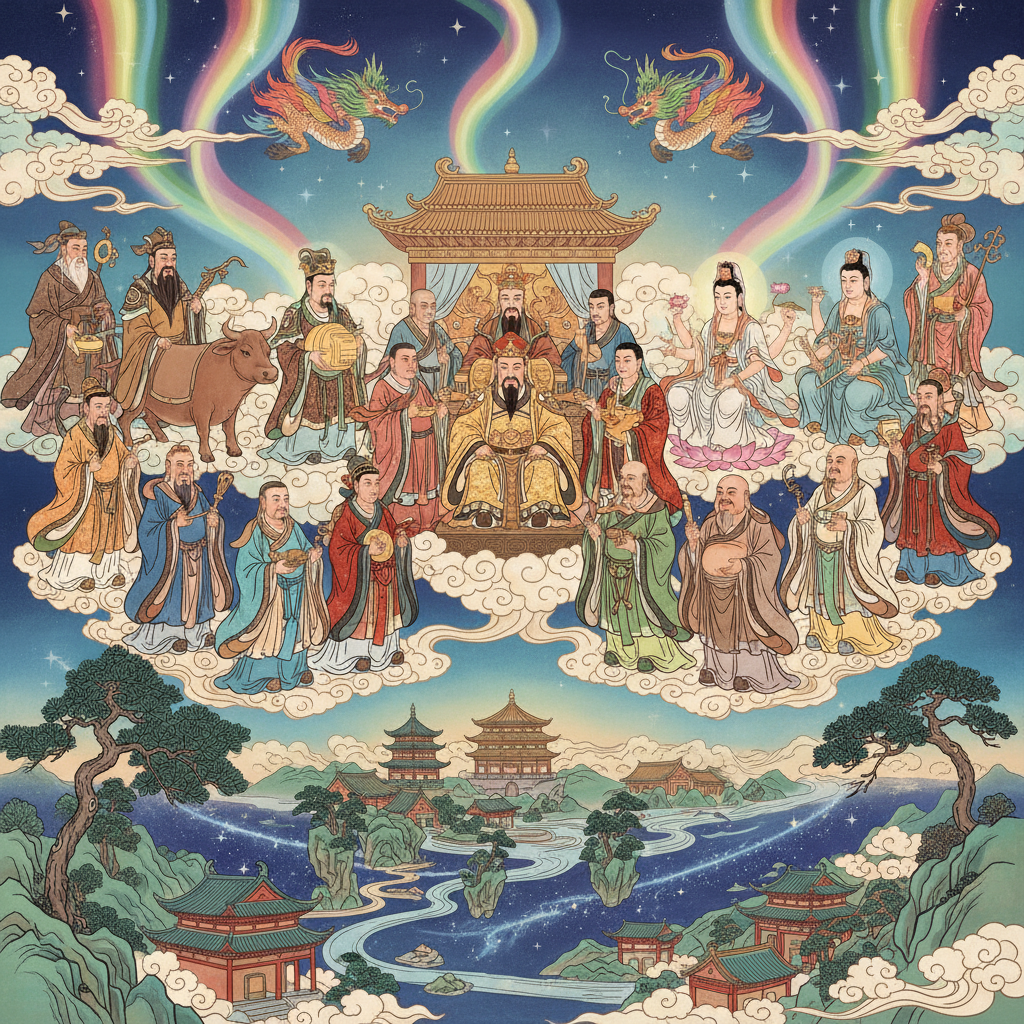
Understanding the Origins of Chinese Deities and Immortals
The tapestry of Chinese religious beliefs is intricately woven with a rich pantheon of deities and immortals. Rooted in Daoist and Buddhist traditions, these divine figures embody various virtues, natural forces, and philosophical ideals, highlighting the ancient Chinese worldview that celebrates harmony, balance, and interconnectedness. From the timeless dramas of gods and emperors to the serene aspects of nature personified, these figures are central to the cultural and spiritual life of China.
The Daoist Pantheon: A Cosmic Order
Daoism, as one of the principal spiritual traditions in China, contributes significantly to the concept of deities. Central to this belief system is the notion of Tao, the ultimate principle that governs the universe. In Daoist cosmology, deities often symbolize natural elements and celestial phenomena. Among them is the Three Pure Ones (Sanqing), who represent fundamental aspects of the universe—heaven, earth, and humanity.
In ancient texts, such as the Dao De Jing and Zhuangzi, the Three Pure Ones exemplify the Daoist pursuit of wisdom and virtue, guiding humanity toward enlightenment. Their presence in temples and rituals underscores their roles as teachers and eternal protectors. Consequently, Daoist deities often facilitate a connection between the physical realm and the spiritual world, where harmony reigns supreme.
Immortal Beings in Chinese Lore
Alongside deities, Chinese lore brims with tales of immortals (Xian), extraordinary beings who transcend the ordinary bounds of life. The Eight Immortals (Ba Xian) are perhaps the most renowned, each embodying unique attributes, powers, and stories that capture the imagination. For instance, Zhang Guolao, depicted as an old man riding a donkey backward, symbolizes wisdom and unorthodox thinking. His tales often emphasize the importance of a playful spirit and subverting conventional norms.
Historically, the concept of immortality goes beyond mere living forever; it signifies personal transformation, enlightenment, and alignment with the Dao. The immortals' depiction in popular culture—through art, folklore, and festivals—continues to resonate, emphasizing virtues like loyalty, integrity, and compassion.
The Shared Divine: Buddhist Influences on Chinese Deities
With the introduction of Buddhism into China during the Han Dynasty, the religious landscape transformed, leading to a fascinating syncretism between Daoist and Buddhist beliefs. Figures such as Guanyin, the Goddess of Mercy, emerged, becoming an object of veneration for millions. Guanyin transcended sectarian boundaries, embodying compassion and understanding, fostering a nurturing presence in both Daoist and Buddhist communities.
Another integral figure is Maitreya, the future Buddha, who symbolizes hope and the promise of enlightenment. His joyous demeanor and teachings resonate with the essence of both traditions, emphasizing universal compassion and peace. The blending of these ideologies enriches the understanding of divine representations and offers insights into moralistic teachings and the pursuit of spiritual fulfillment.
The Cultural Significance of Chinese Deities
Chinese deities and immortals are more than mere symbols; they play crucial roles in festivals, rituals, and daily life. Celebrations like the Chinese New Year and the Ghost Festival feature deities prominently, reflecting communal values and beliefs. For instance, during New Year celebrations, household gods receive offerings, portraying gratitude while inviting blessings for the upcoming year.
Artistic representations, whether in statues, paintings, or traditional operas, serve to keep the stories of these divine figures alive. Temples dedicated to various deities become vibrant cultural hubs where devotees gather, illustrating the intertwined nature of faith, art, and community life. Furthermore, festivals are infused with rich narratives that celebrate these deities, ensuring their relevance in contemporary society.
Preservation of Beliefs in Modern Society
In the modern era, the worship of Chinese deities and immortals is experiencing a revival amidst a backdrop of globalization and cultural exchange. Young people are reconnecting with traditional beliefs, often blending them with modern practices. Social media, art installations, and contemporary literature showcase these deities, adapting their tales to fit modern contexts.
Moreover, as China seeks to celebrate its cultural heritage on a global stage, understanding the nuances of its pantheon becomes vital. International interest in Daoism and Buddhism has emerged, providing opportunities for educational exchanges and tourism centered on temples and sacred sites.
Conclusion: Bridging the Past and Present
The pantheon of Chinese deities and immortals offers a profound insight into the spiritual and cultural fabric of China. Rooted in rich historical contexts and evolving continuously through adaptation and reinvention, these divine figures embody timeless values that resonate across generations. As we delve deeper into the intricacies of Chinese religious beliefs, we not only appreciate their cultural significance but also recognize the shared humanity that connects us all.