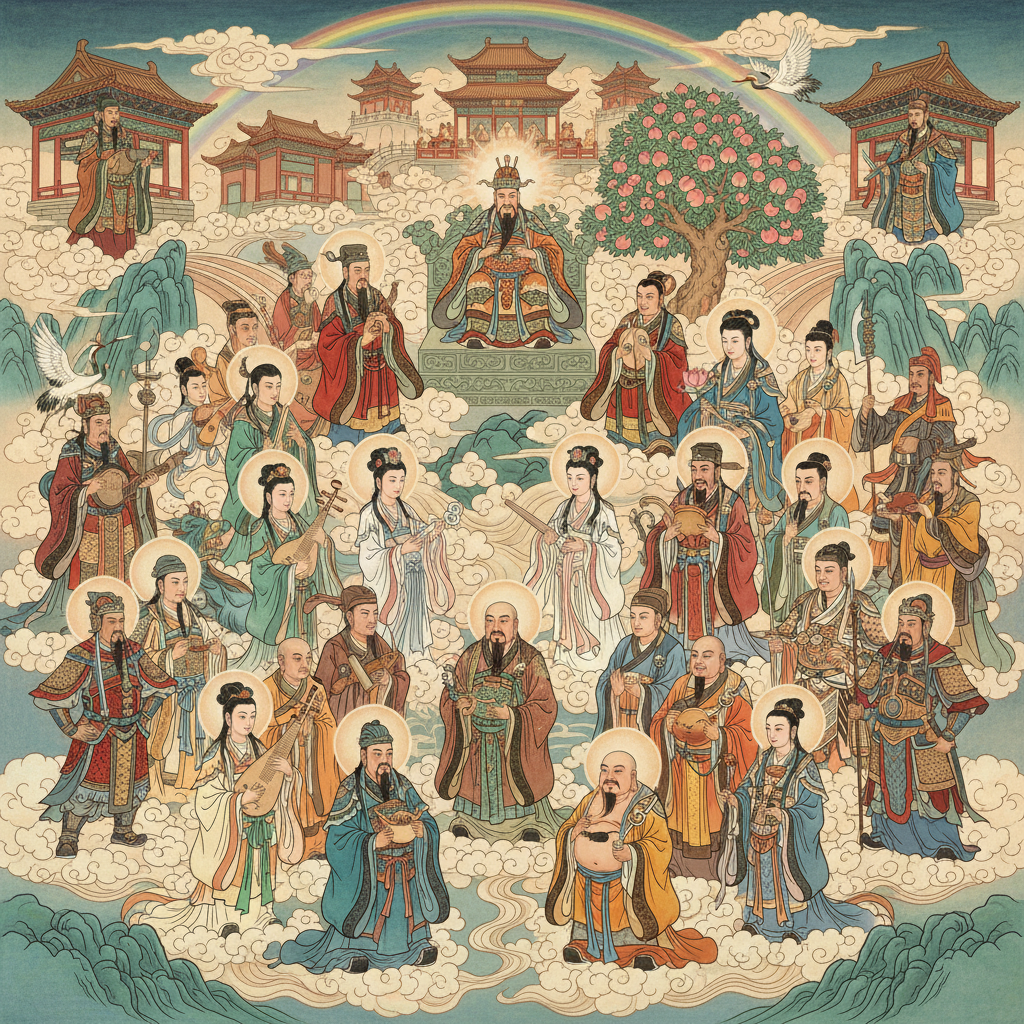
A Glimpse into the Divine: Understanding Chinese Deities and Immortals
Chinese mythology is a rich tapestry of gods, goddesses, and immortal beings that shape the spiritual landscape of Daoism and Buddhism. These figures encapsulate a deep historical context and cultural significance, representing the complexities of life, fate, and the cosmos. Understanding this pantheon provides insight into Chinese religion, philosophy, and cultural practices that have evolved over millennia.
Historical Context: The Evolution of Chinese Deities
The origins of Chinese deities can be traced back to ancient practices and beliefs in animism, shamanism, and early Daoist thought. The concept of deities began to formalize during the Zhou Dynasty (1046-256 BCE) when ancestor worship and the belief in natural gods became prevalent. As Buddhism infiltrated Chinese culture during the Han Dynasty (206 BCE - 220 CE), a fusion of ideas occurred, leading to a complex pantheon that intertwines Daoist and Buddhist beliefs.
Scholars suggest that the interaction between these two religious traditions allowed for the incorporation of various figures from folk beliefs, leading to a diverse spectrum of deities. This historical context not only showcases the evolution of divine figures but also reflects the shifting ideologies of the Chinese people throughout time.
The Key Players: Major Deities in the Daoist Pantheon
Within the Daoist tradition, several prominent deities capture the imagination and devotion of practitioners. The Jade Emperor, known as Yuhuang Dadi, is often regarded as the supreme god. He presides over heaven and earth, overseeing the cosmic order and the bureaucratic functions of the heavens. The role of the Jade Emperor is crucial, representing authority and moral governance.
Another significant figure is the Eight Immortals, or Ba Xian, each embodying unique attributes and life lessons. They are revered in popular culture, literature, and art. The Eight Immortals symbolize hope, vitality, and the possibility of transcending mortality. Their stories serve not only as entertainment but also as moral teachings in the facets of love, friendship, and wisdom.
Immortals and Their Significance in Chinese Culture
Immortals, or Xian, occupy a special place in both Daoist and Buddhist thought. In Daoism, the quest for immortality is a central tenet, with tales of legendary figures who achieved eternal life through various practices and elixirs. These tales often reflect the human aspiration to overcome death and attain a higher state of being.
For example, the goddess Xiwangmu, or the Queen Mother of the West, symbolizes both immortality and femininity. She is associated with paradise and is said to possess the elixir of life. Her portrayal in cultural artifacts often emphasizes her as a protector and a nurturing figure, embodying the values of care and resilience.
The Intersection of Daoism and Buddhism: Shared Deities
The intertwining of Daoism and Buddhism has resulted in the emergence of shared deities who embody aspects from both traditions. For instance, Avalokiteshvara, known as Guanyin in Chinese culture, is a bodhisattva of compassion in Buddhism who has also been integrated into Daoist beliefs. She is revered as a protector of women and children, demonstrating the seamless blending of ideals between the two religions.
Another shared figure is the deity Dizang (Ksitigarbha), who is regarded as a guardian of the underworld in Buddhist belief. His role in Daoist practices highlights a mutual respect for the spiritual dimensions of life and the afterlife, showcasing how these religious traditions have complemented rather than conflicted with one another.
Cultural Practices and Their Enduring Legacy
The worship of Chinese deities and immortals manifests in various cultural practices that continue to endure today. Festivals, rituals, and ceremonies emphasize communal devotion and remembrance. For example, during the Chinese New Year, people pay homage to their ancestors and deities, seeking blessings for prosperity and good fortune in the upcoming year.
Moreover, temples dedicated to different deities serve as cultural hubs for communities to connect, worship, and celebrate traditions. These sites often blend architectural beauty with symbolic representation, offering a space where the divine and the earthly coexist.
Conclusion: Embracing the Divine in Everyday Life
The pantheon of Chinese deities and immortals reflects a profound understanding of the universe and human existence. Their stories and significance resonate deeply within the cultural fabric of Chinese society, offering valuable insights into values, ethics, and spiritual aspirations. As both Daoist and Buddhist beliefs continue to adapt and thrive, the reverence for these divine figures endures, promoting a timeless connection to the sacred in modern life. Embracing this legacy not only preserves cultural heritage but also fosters a deeper appreciation for the interconnectedness of all beings.