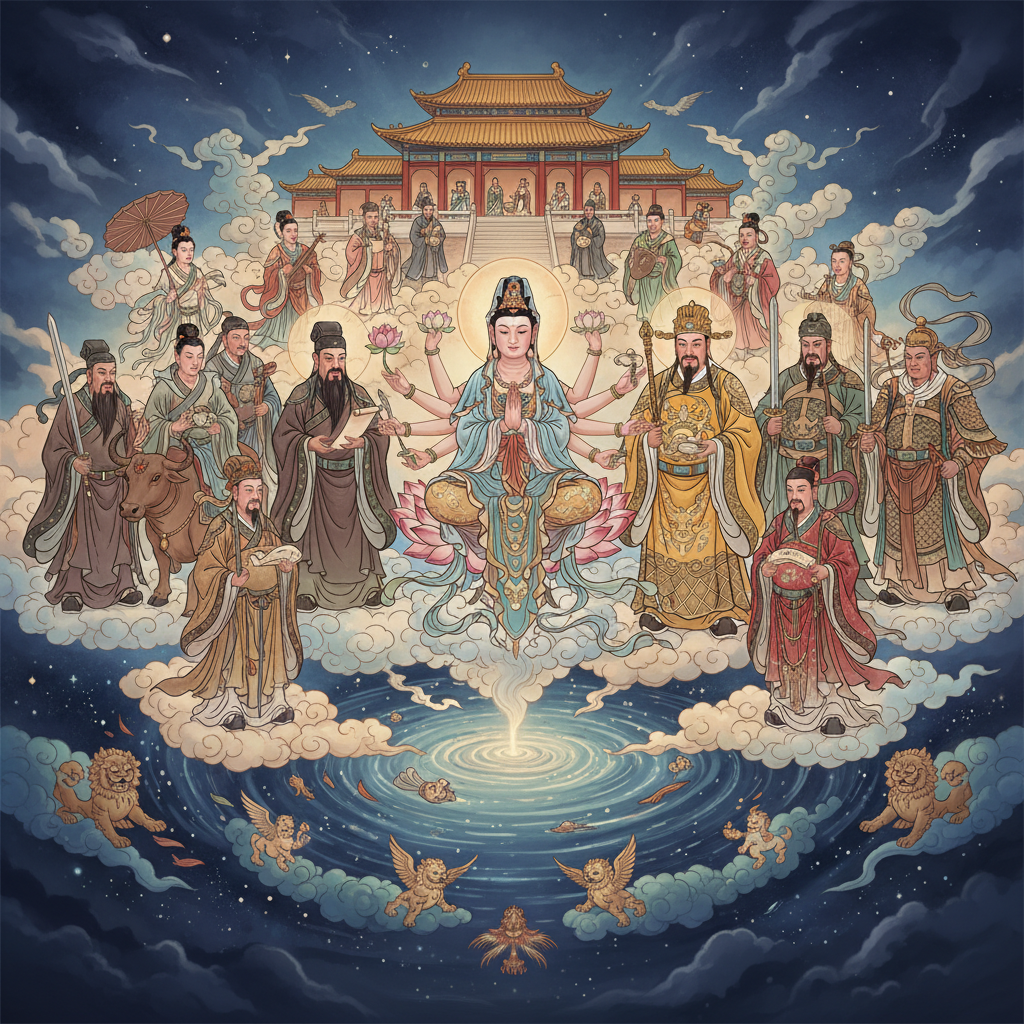
Introduction: The Cosmos of Chinese Ideology
Chinese religious tradition is a rich amalgamation of indigenous beliefs, Buddhist influences, and Daoist philosophies. This complex pantheon of deities and immortals reflects not just the spirituality of the people but also their societal values, moral teachings, and a quest for harmony in the universe. In this exploration, we will delve into notable figures from both Buddhism and Daoism and understand their historical context and cultural significance.
Historical Context: From Ancient Beliefs to Formal Religion
The origins of Chinese deities can be traced back to the ancient folk beliefs of the agrarian societies that existed thousands of years ago. Over time, these beliefs evolved into more formalized religious systems, notably Daoism and Buddhism, which intermingled and influenced one another.
Daoism, with its roots in the Dao De Jing—a classic text attributed to Laozi—emphasizes harmony with the natural world. Its pantheon includes gods and immortals who embody various aspects of nature and morality. On the other hand, Buddhism, which was introduced to China around the Han Dynasty, brought its own cadre of deities such as Avalokiteshvara and the Maitreya, the Buddha of the Future.
The Daoist Immortals: Xian and Their Significance
In Daoist thought, the concept of immortality is symbolized by the Xian, or "Immortals." These legendary figures are said to have transcended the physical world through spiritual practices and alchemy. The Eight Immortals, perhaps the most famous ensemble, include figures such as He Xiangu, the only female immortal, and Li Tieguai, known for his iron crutch and philosophical wisdom.
These characters are deeply ingrained in Chinese folklore, and their stories serve as moral allegories that emphasize virtue, self-cultivation, and the pursuit of enlightenment. Festivals celebrating the Eight Immortals are common, and their iconography is often seen in temples, paintings, and even in street performances during festive seasons.
Buddhist Deities: Bridging Worlds and Cultures
Chinese Buddhism has developed its own unique pantheon, influenced by indigenous beliefs and interpretations of Mahayana Buddhism. Prominent deities include Guanyin (Avalokiteshvara), the Bodhisattva of compassion, who is revered for her ability to assist all sentient beings in distress. Her imagery often embodies feminine qualities, making her exceptionally significant in Chinese culture, especially among women.
Another crucial figure is the Medicine Buddha, Bhaisajyaguru, who symbolizes healing and restoration. He is often invoked for assistance in physical ailments and spiritual distress, reflecting the profound interconnection between health, spirituality, and morality in Chinese society.
Cultural Significance: Festivals and Practices
The veneration of these deities culminates in various festivals and practices throughout Chinese culture. For instance, the birthday celebrations of Guanyin, often observed on the 19th day of the second lunar month, are marked by rituals and activities dedicated to compassion and kindness.
Moreover, the worship of the Eight Immortals finds expression in the annual celebration of the Tianjin Binhai International Folk Arts Festival, where themes of Daoist philosophy and folklore manifest through vibrant performances.
The household worship of these deities is also prevalent, where altars adorned with images, incense, and offerings serve as focal points for daily prayers and spiritual expressions. This practice symbolizes a deep-rooted connection between the divine and the domestic sphere, integrating spirituality into daily life.
Conclusion: A Living Heritage
The deities and immortals of Chinese Buddhism and Daoism are not just static figures of worship; they represent a living heritage that encapsulates the moral, philosophical, and artistic values of a civilization. Through stories, rituals, and festivals, they continue to inspire and guide millions. Understanding this intricate umbrella of belief allows for a broader appreciation of the complexities of human thought and spirituality within the Chinese cultural landscape.
As we explore these divine figures, we uncover a deeper narrative about the historical interplay of ideas, the quest for meaning, and the enduring human spirit in the face of life’s challenges. Their stories echo through the ages, inviting us into a world where the sacred and the everyday coexist harmoniously.