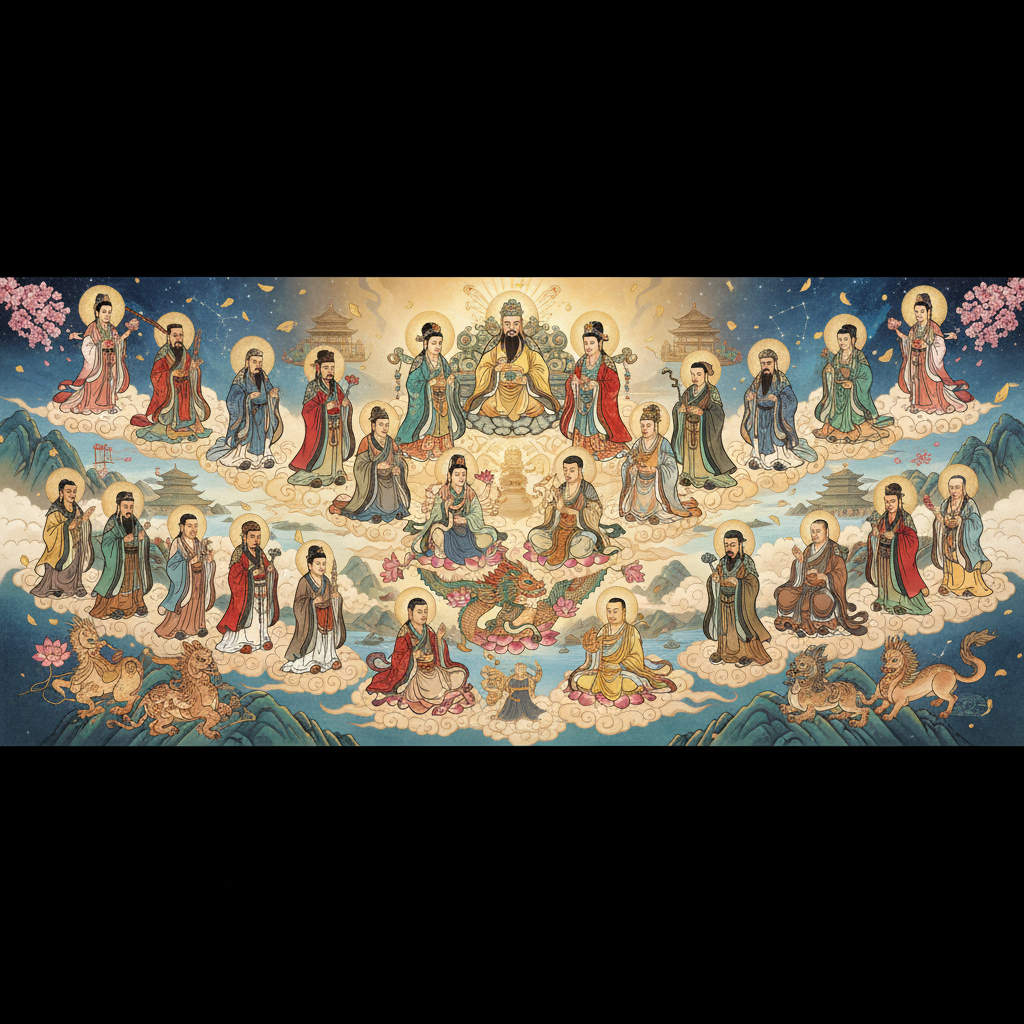
Introduction to Chinese Deities and Immortals
China’s rich spiritual tapestry comprises a vast pantheon of deities and immortals drawn from Daoist and Buddhist traditions. These figures are not only central to religious practices but also deeply ingrained in Chinese culture, folklore, and philosophy. Understanding the historical and cultural layers behind these divine and semi-divine beings offers valuable insights into China’s complex religious landscape.
Historical Origins: Daoism and Buddhism in China
Daoism, one of the indigenous spiritual traditions of China, emerged during the late Zhou Dynasty (around 4th century BCE), emphasizing harmony with the Dao—the fundamental principle underlying the universe. Its pantheon includes gods, immortals (xian), and spirits that represent cosmic forces, natural phenomena, and moral virtues. Daoist immortals symbolize transcendence and longevity, illustrating the possibility of humans attaining spiritual immortality through cultivation and meditation.
Buddhism entered China via the Silk Road around the 1st century CE, interfacing with native beliefs and eventually forming a unique Chinese Buddhist identity. Buddhist deities, bodhisattvas, and enlightened beings adapted to local customs, often worshipped alongside Daoist figures. This syncretism enriched the Chinese religious milieu with deities emphasizing compassion, wisdom, and salvation.
Key Daoist Immortals: The Eight Immortals and Beyond
Perhaps the most celebrated figures in Daoism are the Eight Immortals (Ba Xian), legendary beings who attained immortality through spiritual practice and are often seen as embodiments of various virtues and social roles. These immortals—each with distinctive attributes such as the flute-playing Lan Caihe or the iron-crutch-wielding Li Tieguai—are popular in art, literature, and festivals. They symbolize the hope of transcendence and the interplay between the mundane and spiritual worlds.
Beyond the Eight Immortals, Daoism venerates prominent deities such as the Queen Mother of the West (Xi Wangmu), a goddess associated with immortality and the mystical peach tree that grants eternal life. These figures reflect Daoism’s focus on cosmic balance and the pursuit of longevity.
Buddhist Figures in Chinese Culture: Bodhisattvas and Buddhas
In the Buddhist pantheon adopted and adapted in China, bodhisattvas—enlightened but compassionate beings who delay nirvana to aid others—hold particular significance. Guanyin (Avalokiteshvara), the bodhisattva of compassion, is one of the most beloved and widely worshipped figures in Chinese Buddhism. Often depicted as female in Chinese contexts, Guanyin symbolizes mercy and aid to those in distress.
Another vital figure is Dizang (Kṣitigarbha), the bodhisattva who vows to rescue souls from hell realms, embodying vows of salvation and protection. Additionally, the historical Buddha (Siddhartha Gautama) and cosmic Buddhas such as Amitābha play vital roles in devotional practices, especially within Pure Land Buddhism, which promises rebirth in a paradisiacal realm via faith and merit.
Cultural Significance and Syncretism of the Pantheon
Chinese religious practice rarely segregates Daoist and Buddhist figures rigidly; instead, syncretic worship flourishes. Temples often enshrine deities from both traditions, reflecting the complementary roles these beings play in everyday life—health, protection, prosperity, and spiritual guidance. This blending of deities represents a pragmatic spirituality aimed at addressing multiple aspects of human existence rather than exclusivist dogma.
Festivals such as the Lantern Festival and the Ghost Festival are infused with rituals that honor both Daoist immortals and Buddhist spirits, illustrating the integration of cosmology, morality, and community cohesion. In literature, dramas, and visual art, these divine figures inhabit an expansive mythological universe that continues to inspire modern Chinese identity.
Conclusion: Enduring Legacy of Chinese Deities and Immortals
The deities and immortals of Daoism and Buddhism constitute a living heritage that transcends religious boundaries, revealing how mythology and spirituality animate Chinese culture. Their stories and symbols provide historical continuity, ethical frameworks, and aesthetic inspiration. By engaging with the Daoist and Buddhist pantheon, one gains not only an understanding of ancient Chinese beliefs but also an appreciation of the enduring human quest for harmony, compassion, and transcendence.