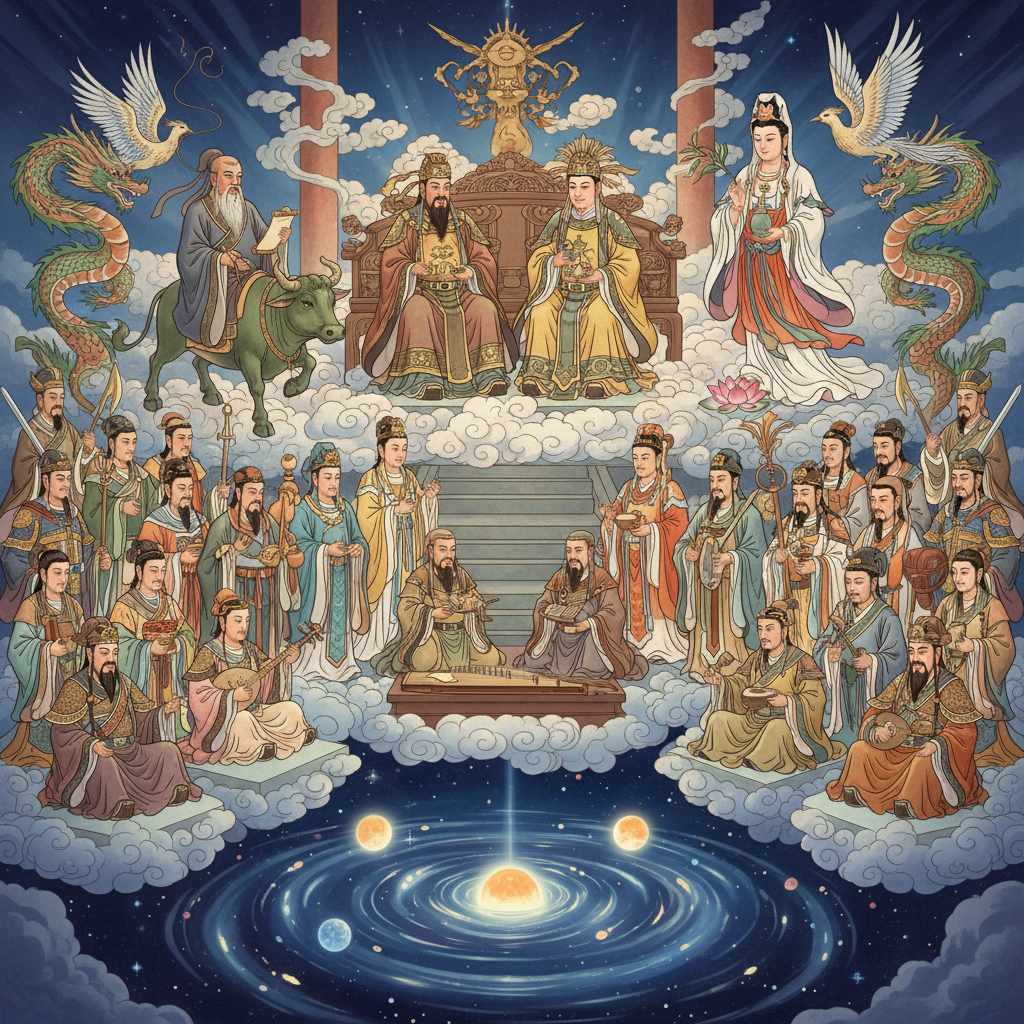
Introduction to Chinese Creation Myths and Pantheon
Chinese mythology encompasses a vast and intricate tapestry of deities, immortals, and cosmic beings, reflecting the rich religious traditions of Daoism, Buddhism, and ancient folklore. These stories not only explain the origins of the universe and human life but also illustrate the moral and spiritual values that have shaped Chinese culture over millennia. Central to these myths are the dynastic gods and transcendent immortals who govern natural forces, human destinies, and cosmic order. This article explores the creation myths within the Daoist and Buddhist pantheon and highlights the historical and cultural significance of these divine figures.
The Primordial Cosmos: Foundations of the Universe
In traditional Chinese cosmology, the universe begins in a formless chaos, where yin and yang—the fundamental cosmic forces—intertwine. Daoist myths often portray the void before creation as an undifferentiated mass, which eventually gives rise to the ordered cosmos through divine intervention. Unlike Western creation stories centered on a singular deity, Chinese narratives emphasize a process of cosmic balance and transformation.
Among the significant figures is Nuwa (女娲), a mother goddess who plays a pivotal role in shaping humanity. According to myth, Nuwa molded humans from yellow earth, breathing life into them to repopulate the earth after a catastrophic flood. Nuwa's act symbolizes creation through harmony and restoration, embodying Daoist ideals of nurturing and balance. Her story underscores humanity’s intrinsic connection to nature and the divine.
Daoist Immortals: The Quest for Transcendence
Integral to Chinese spiritual traditions are the Eight Immortals (八仙, Baxian), legendary figures who have attained immortality through various means such as alchemy, meditation, or heroic deeds. These immortals exemplify the Daoist pursuit of longevity and spiritual enlightenment and are often invoked as symbols of hope and prosperity.
Each immortal carries unique attributes and magical implements, representing different social backgrounds and virtues—ranging from scholars and warriors to peasants. Their stories demonstrate the Daoist principle that immortality and harmony with the Dao (the Way) are attainable by anyone, regardless of their origin. Their enduring popularity in literature, art, and religious practice reflects the democratization of spiritual ideals in Chinese culture.
The Buddhist Influence and Syncretism in Chinese Mythology
Buddhism, arriving in China around the first century CE, significantly enriched the native pantheon with new deities and philosophies, leading to a fascinating cultural and religious syncretism. Chinese Buddhism often merges with Daoist concepts, creating a blended tradition reflected in both mythology and religious life.
One prominent Buddhist deity in Chinese culture is Guanyin (观音), the Bodhisattva of Compassion. Though originally rooted in Indian Mahayana Buddhism, Guanyin has been adapted into Chinese religious practice as a goddess who intercedes on behalf of those suffering and guides souls toward enlightenment. This adaptation highlights how Buddhist figures were culturally localized, fostering broader acceptance among Chinese devotees.
Buddhist cosmology introduced cycles of samsara (rebirth) and karma alongside Daoist ideas of harmony with nature, enriching narratives about the origins and destiny of souls in the universe. This interplay between traditions deepened understanding of morality, life, and creation within Chinese spirituality.
Heaven’s Bureaucracy: Divine Hierarchies and Cosmic Governance
A distinctive feature of Chinese religious imagination is the conceptualization of a heavenly bureaucracy mirroring imperial China’s government. The realms of gods, immortals, and spirits are ordered hierarchically, with assigned roles relating to natural phenomena, moral order, and human affairs.
Though the Jade Emperor features prominently as a supreme ruler, many myths elaborate a complex celestial court staffed by deities responsible for weather, harvests, fertility, and justice. This bureaucratic model aligns with Confucian emphasis on order and hierarchy, reinforcing social values through religious belief. The portrayal of a well-organized divine administration offered reassurance and a moral framework for understanding the cosmos as a just and orderly place.
Cultural Legacy and Continuing Influence
The pantheon of Chinese deities and immortals continues to influence contemporary culture, religious practice, and artistic expression. Temples dedicated to these figures dot the Chinese landscape, and festivals celebrate their myths, offering modern-day believers a connection to ancestral traditions.
Moreover, literature, opera, and visual arts regularly draw on these mythologies to explore themes of creation, morality, and human transcendence. The enduring appeal of these myths reflects their profound role in shaping Chinese identity, spirituality, and worldview over thousands of years.
Conclusion
Chinese creation myths and the pantheon of Daoist and Buddhist deities offer a complex, multidimensional understanding of origin, existence, and the cosmos. They blend philosophical concepts with mythic narratives to convey a vision of harmony between humanity, nature, and the divine. Through figures like Nuwa, the Eight Immortals, and Guanyin, these traditions demonstrate the rich cultural fabric of China’s religious heritage—one that continues to inspire and resonate with people today.