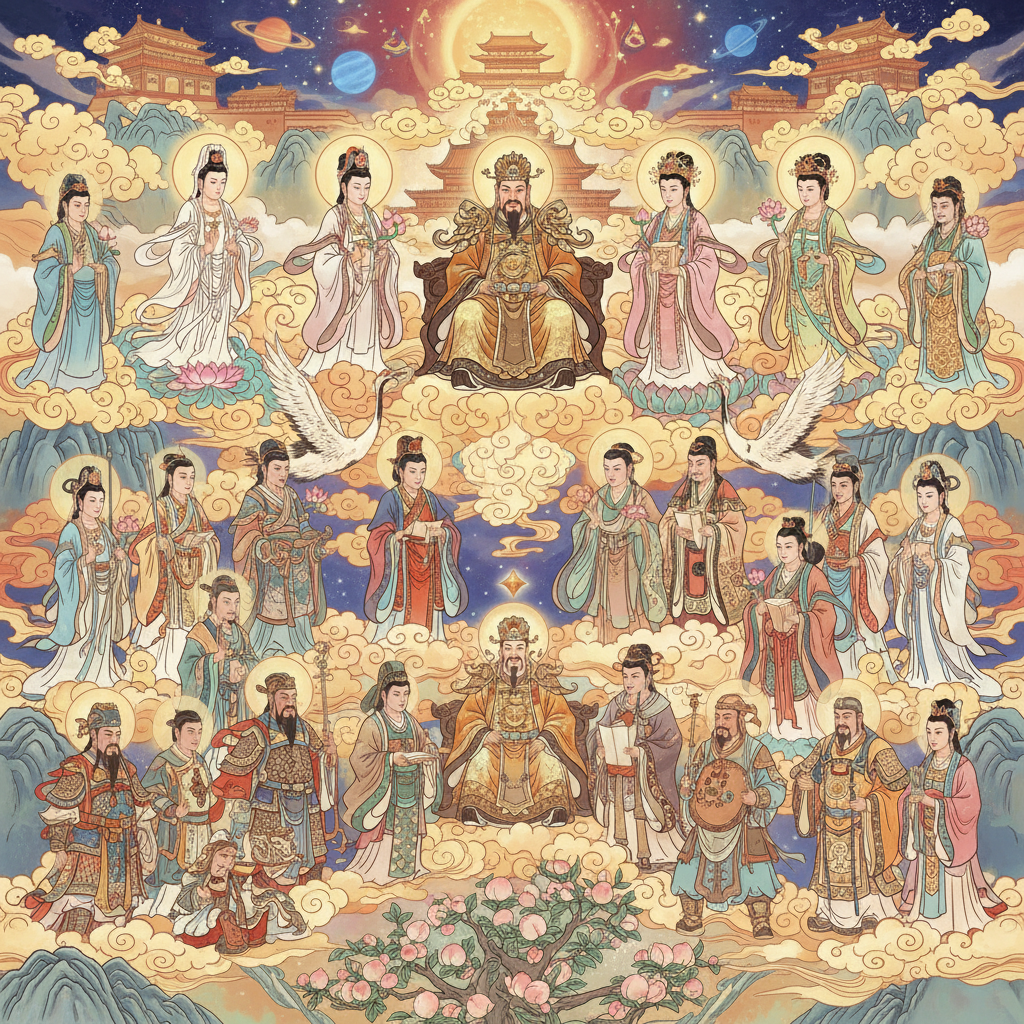
Introduction to Chinese Deities and Immortals
Chinese culture is steeped in a rich tapestry of religious beliefs and practices, with deities and immortals playing a central role in shaping both spirituality and cultural traditions. Rooted primarily in Daoism and Buddhism, but also influenced by folk religion and Confucianism, the pantheon of Chinese gods and immortals guides moral values, agricultural cycles, and community festivals. These divine figures are not only objects of worship but serve as symbols of cosmic order and human aspiration.
Historical Origins and Evolution of the Pantheon
The worship of Chinese deities dates back thousands of years, blending indigenous animist beliefs with the philosophical and religious frameworks of Daoism and Buddhism. Daoism's focus on harmony with nature and the pursuit of immortality introduced a host of celestial beings and sages, while Buddhism brought a structured hierarchy of enlightened beings and bodhisattvas into Chinese spirituality. Over centuries, these traditions mingled, giving rise to a pantheon that includes both native gods and Buddhist figures, reflecting China’s dynamic cultural exchanges.
Key Figures in the Daoist Pantheon
Central to Daoist belief is the concept of immortality and spiritual transcendence. The Eight Immortals (Ba Xian) are among the most renowned figures, each representing different aspects of life and wielding unique magical artifacts. These immortals personify virtues such as courage, wisdom, and longevity, inspiring festival rites especially during the Lunar New Year. Another significant deity is the Queen Mother of the West (Xi Wangmu), guardian of the elixir of immortality and a symbol of divine femininity and power. Together, these figures underscore Daoism’s intimate connection with nature and cosmic balance.
Buddhist Deities and Their Cultural Impact
Buddhism introduced a diverse array of deities into Chinese spirituality, often symbolizing compassion, protection, and enlightenment. Guanyin, the bodhisattva of mercy, is one of the most popular and widely venerated figures, especially during festivals like the Ghost Festival, where her compassion is invoked for the restless spirits. Other prominent figures include the Medicine Buddha (Yao Shi Fo), offering healing blessings, and the Thousand-Armed Avalokiteshvara, representing boundless compassion. Buddhist deities often overlap with Daoist and folk beliefs, exemplifying China’s syncretic religious landscape.
Festivals Celebrating the Divine Pantheon
Many Chinese festivals serve as vibrant expressions of devotion to these deities and immortals. The Lantern Festival marks the end of Lunar New Year celebrations with lanterns symbolizing light and guidance from the gods. The Birthday of the Eight Immortals is celebrated with temple fairs and theatrical performances that narrate their mythic deeds. Meanwhile, the Ghost Festival honors spirits and ancestral souls, with rituals invoking Buddhist and Daoist protections. These festivals reflect centuries-old traditions where communal worship, storytelling, and ritual offerings strengthen social bonds and spiritual harmony.
Cultural Significance and Contemporary Influence
The enduring presence of Chinese deities and immortals in festivals highlights their vital role in cultural identity and moral education. Beyond religious veneration, these figures inspire art, literature, and popular culture, maintaining relevance in modern society. Daoist temples and Buddhist monasteries continue to be centers for festive celebrations, attracting devotees and tourists alike. Understanding these deities offers insight into China's philosophical depth and the ways communities find meaning, hope, and continuity through ritual.
Conclusion
Chinese deities and immortals form an intricate network of spiritual beings integral to Daoist and Buddhist traditions. Their stories and associated festivals weave a cultural narrative celebrating immortality, compassion, and cosmic balance. Whether through grand temple ceremonies or lively folklore performances, the reverence for these divine figures continues to enrich Chinese cultural heritage across generations.