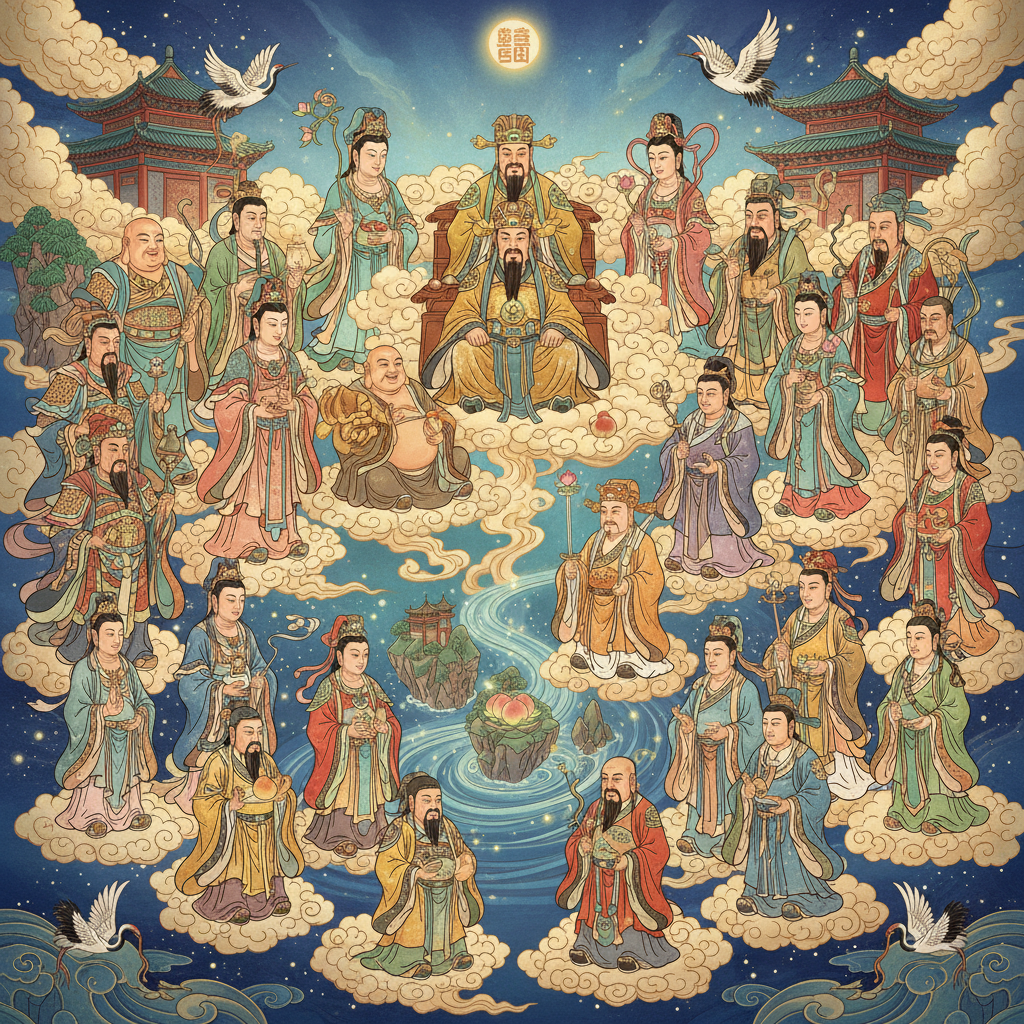
Introduction to Chinese Deities and Immortals
Chinese religious culture is a rich tapestry woven from Daoist, Buddhist, and folk traditions, featuring a diverse pantheon of deities and immortals. These figures embody humanity’s spiritual aspirations, natural phenomena, moral values, and cosmological order. Rooted in thousands of years of history, the belief in divine beings shapes community life and cultural identity across China. This article delves into the historical context, cultural significance, and fascinating details surrounding some of the most revered gods and immortals in Daoist and Buddhist folk religion.
Historical Context: Syncretism in Chinese Spiritual Traditions
The spiritual landscape in China is characterized by syncretism — the blending of Daoism, Buddhism, Confucianism, and indigenous folk beliefs. Daoism, often regarded as China’s native spiritual system, emphasizes harmony with the Dao (the Way) and the quest for immortality. Buddhism entered China around the 1st century CE, introducing a complex pantheon of bodhisattvas and Buddhas integrated into Chinese culture. Over centuries, both religious systems absorbed and influenced local deities, forming a composite pantheon revered by everyday people, which includes gods related to household welfare, nature, health, and governance.
Prominent Daoist Immortals: The Eight Immortals and Beyond
Among Daoist deities, the Eight Immortals (Baxian) are iconic figures symbolizing longevity, prosperity, and transcendence. Each immortal carries distinct attributes and magical tools—such as Lü Dongbin’s sword to dispel evil, or He Xiangu’s lotus flower representing purity. These immortals embody ideals of spiritual cultivation and the ability to transcend earthly limitations, inspiring mythology, poetry, and art. Their stories emphasize Daoist themes of alchemy, meditation, and the balance of yin and yang energies.
Beyond the Eight Immortals, Daoism includes numerous other celestial beings and gods overseeing natural elements, such as the Dragon Kings who control water and weather, and Zao Jun, the Kitchen God, whose annual report influences household fortune. Though often lesser known outside of China, these gods play an integral role in local worship and seasonal festivals.
Buddhist Pantheon and Adaptations in Chinese Culture
Buddhism brought a vast array of divine figures who were assimilated into Chinese cosmology. Bodhisattvas like Guanyin, the Goddess of Mercy, became profoundly popular for their compassion and willingness to aid suffering beings. Guanyin’s images are common in homes and temples, and her worship underscores the importance of kindness and salvation in Chinese religious life.
Chinese Buddhism also features the Four Heavenly Kings—guardian gods stationed at the cardinal directions—who protect the Dharma and symbolize order within the celestial realm. Over centuries, Chinese Buddhist art and literature transformed these figures to resonate with native cultural ideals, blending Buddhist concepts with indigenous symbolism and Daoist cosmology.
Folk Gods and Their Social Functions
Folk gods occupy an essential position in Chinese spiritual life, often tied to specific communities, professions, or localities. Deities like Tudigong (Earth God) preside over land and agriculture, facilitating prosperity at a grassroots level. Their worship demonstrates the intimate relationship between humans, environment, and divine forces.
City Gods (Chenghuang), distinct from national deities, govern urban areas, adjudicate disputes, and maintain social order. Their shrines ensure community cohesion and reflect traditional Chinese emphasis on hierarchy and justice. Similarly, wealth gods like Caishen are venerated to attract fortune and success, particularly during festivals such as Chinese New Year.
Such folk gods are typically celebrated in vibrant rituals, processions, and temple fairs—events serving as social glue binding rural and urban populations through shared heritage and identity.
Cultural Significance and Contemporary Relevance
The pantheon of Chinese deities and immortals remains a living cultural phenomenon. Temples continue to be active centers of worship and cultural preservation. These figures also inspire literature, cinematic portrayals, and popular media, perpetuating their relevance.
Understanding these gods offers insight into Chinese values: the emphasis on harmony with nature, moral rectitude, transcendence, and the integral connection between the human and the divine. Whether through Daoist allegories of immortality or Buddhist teachings on compassion, this spiritual tradition reflects a profound worldview that transcends mere superstition, embodying ethical guidance and cultural memory.
Conclusion
The Daoist and Buddhist pantheon of Chinese folk gods and immortals represents an enduring legacy integral to understanding China’s spiritual and cultural heritage. Their stories and worship practices illuminate the interwoven nature of religion, philosophy, and everyday life in China. By exploring these divine figures, one gains a deeper appreciation of the values, history, and artistic richness that continue to shape Chinese society through the ages.