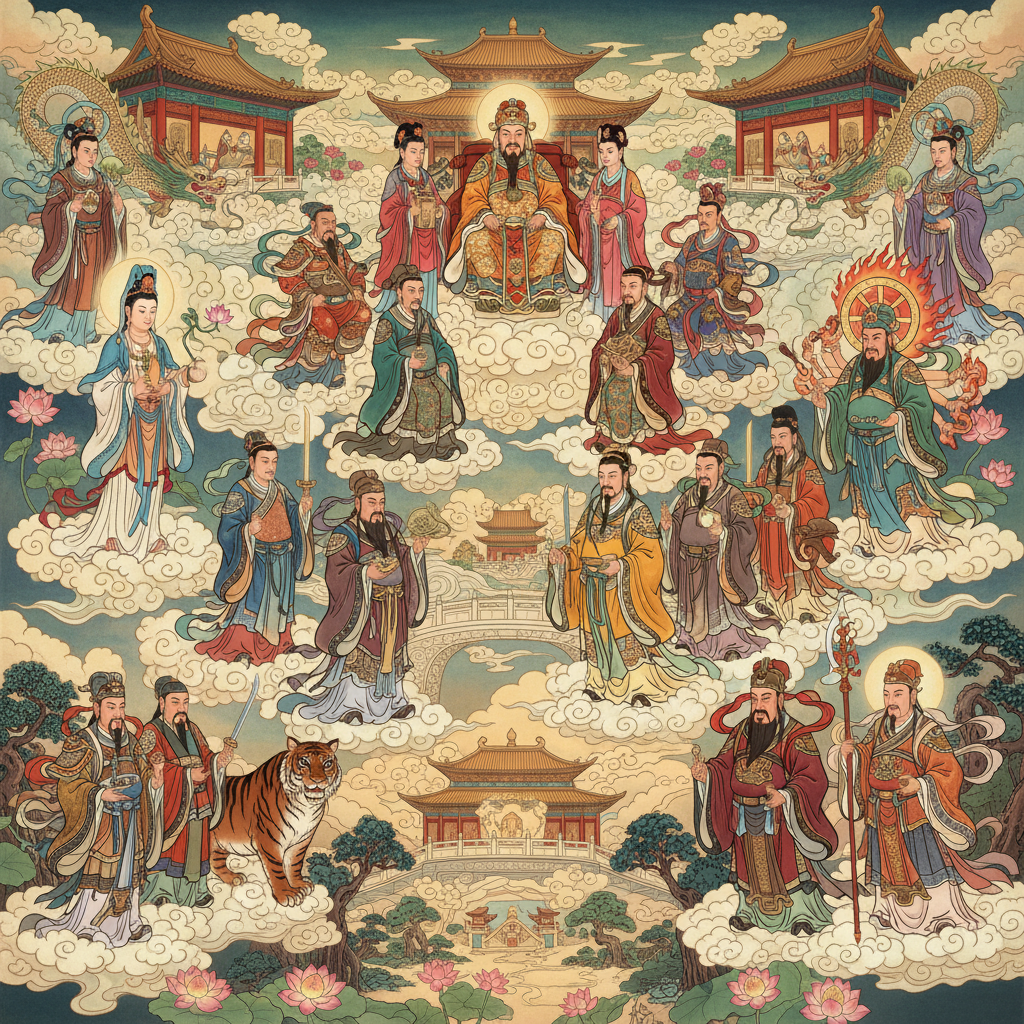
The Historical Roots of Chinese Deities and Immortals
Chinese folk religion is a captivating blend of traditions, beliefs, and practices that have evolved over thousands of years. Central to this belief system are the myriad of deities and immortals who reflect the values, aspirations, and cultural nuances of Chinese society. Historically, these deities have their origins in various sources, including ancient shamanistic practices, popular Buddhism, and Daoist philosophy, each contributing to a rich pantheon that plays a pivotal role in the everyday lives of the Chinese people.
The cosmological views held by ancient Chinese civilizations established a foundational understanding of the universe, which inherently influenced their beliefs in deities. Early deities were often associated with nature, embodying elements like water, fire, and earth. As time progressed, these deities evolved, and new immortals emerged, reflecting a society that sought metaphysical explanations for life's challenges and desires.
The Major Deities of Chinese Folk Religion
The pantheon of Chinese deities is vast, with each holding a specific role in the lives of practitioners. Among them is Guangong, a figure who symbolizes loyalty and righteousness. Revered as both a god of war and protector of the people, Guan Yu's veneration speaks volumes about the values of heroism and loyalty deeply embedded in Chinese culture.
Another crucial figure is Mazu, the sea goddess who safeguards fishermen and maritime travelers. Mazu’s worship highlights the importance of the sea in Chinese history and trade, serving as both a protective force and a cultural icon for coastal communities. Her legend showcases how deities adapt to societal needs, reflecting the relationship between people and the environment.
The Immortals: Symbols of Freedom and Wisdom
In Chinese culture, the concept of immortality is intricately tied to the Eight Immortals, a group of legendary figures celebrated for their unique attributes and extraordinary stories. Each immortal exemplifies distinct virtues and values: Li Tieguai, known for his crutch and bag, represents the notion of enlightenment through hardship, while Zhang Guolao, often depicted riding a donkey backward, embodies the wisdom gained from unconventional thinking.
The tales of the Eight Immortals serve a dual purpose: they entertain and instruct. Their stories encourage moral behavior and highlight the importance of integrity, compassion, and cleverness in navigating life's challenges. Beyond mere folklore, these narratives contribute to a cultural ethos that emphasizes balance and harmony.
Daoist Influences on the Deity Framework
Daoism profoundly shapes the understanding of Chinese deities and immortals, offering a spiritual framework that seeks harmony with the universe. Central to Daoist thought is the idea of the Dao, or the Way, which underpins the nature of existence and the relationship between humanity and the cosmos.
In this context, deities often personify elemental forces and cosmic principles, fostering a reverence for natural phenomena. One prominent figure is Laozi, the legendary sage often associated with the founding of Daoism. His teachings encourage followers to seek tranquility and simplicity, a reflection of the philosophical tenets that influence how deities are worshiped and revered in Chinese folk religion.
Cultural Significance and Modern-Day Relevance
Today, the reverence for Chinese deities and immortals continues amidst growing modernization. Temples dedicated to these figures remain focal points of community life, while festivals honoring their narratives serve as cultural touchstones that reinforce identity and continuity.
Rituals such as the Tian Gong Festival celebrate the birthday of the Jade Emperor, while the Mazu Pilgrimage draws thousands of devotees seeking blessings and protection. Through these practices, the ancient intersects with the contemporary, ensuring that traditions are preserved even as societies evolve.
Conclusion: The Enduring Legacy of Chinese Deities
The rich tapestry of Chinese deities and immortals serves as a testament to the creative spirit and resilience of Chinese folk religion. These figures not only encapsulate the moral frameworks and aspirations of society but also embody a connection to history, nature, and the cosmos. As modern-day challenges emerge, the stories and teachings of these deities continue to resonate, guiding and inspiring generations in their path toward balance and fulfillment.
In exploring the diverse and fascinating world of these deities and immortals, we uncover vital cultural insights, affirming their significance in both historical and contemporary contexts.