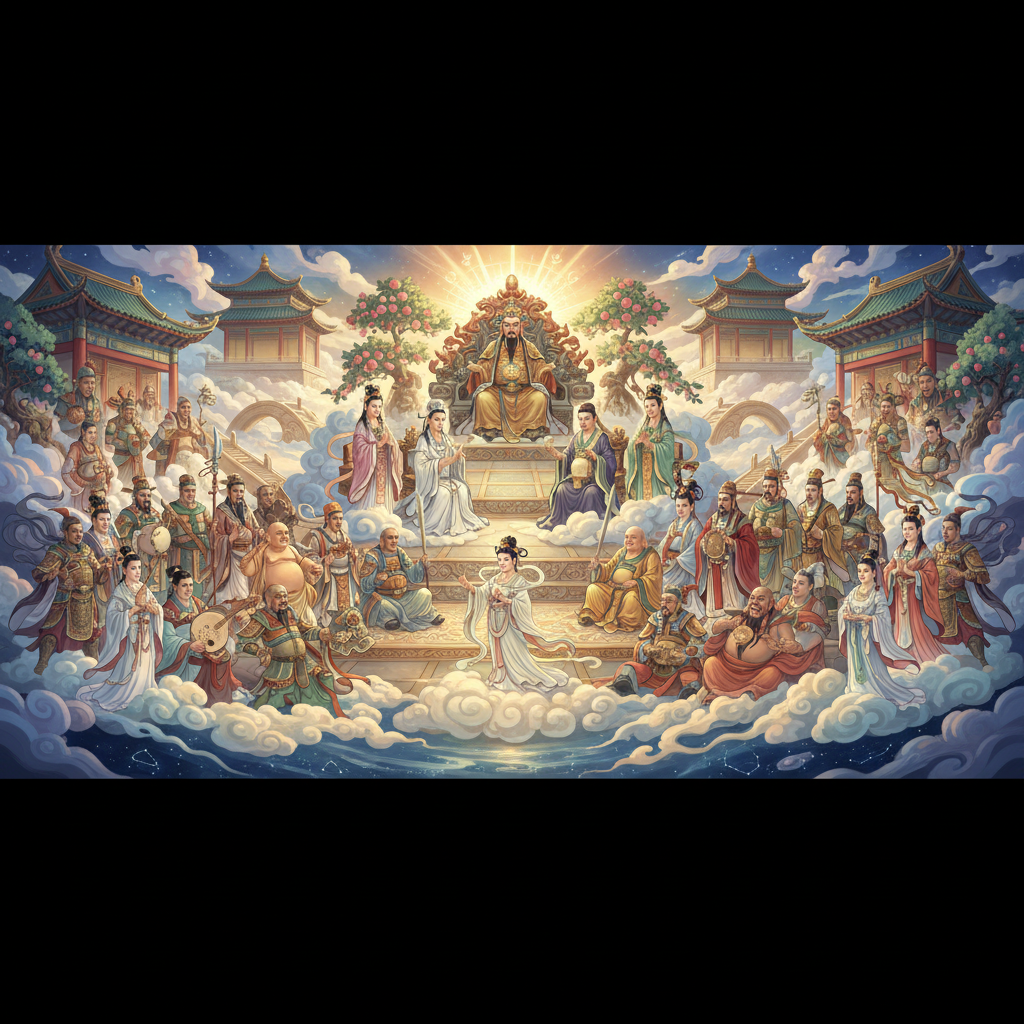
The Ancient Roots of Chinese Deities and Immortals
Chinese mythology is a deep well of fascinating narratives and characters, rooted in millennia of cultural and religious evolution. At the heart of this rich narrative tapestry is a vast pantheon comprising deities, immortals, and religious figures cherished within Daoist and Buddhist traditions. This exploration highlights the historical context surrounding these celestial beings, their cultural significance, and notable legends associated with them.
The Heavenly Court: Structure and Significance
In Daoism, the concept of the Heavenly Court represents a divine bureaucracy, with deities organized in a hierarchy that reflects the values and beliefs of Chinese society. The Jade Emperor often presides over this court, embodying order and justice. Various ranks of deities cater to specific aspects of life—such as fortune, protection, and health—making the Heavenly Court an essential structure for understanding the balance of human existence.
Culturally, the Heavenly Court serves as a reflection of Confucian ideals, emphasizing the importance of hierarchical relationships and social harmony. The organization within the court not only showcases the moral compass of traditional Chinese society but also illustrates the integration of religious and mythological elements into people's everyday lives.
The Immortals: Guardians of Wisdom and Guidance
The Eight Immortals, or Ba Xian, are perhaps the most recognizable figures among the Daoist pantheon. Each immortal embodies distinct attributes and powers, enabling them to navigate the challenges of life. For example, Zhang Guo Lao, the white-haired, enigmatic figure associated with longevity, utilizes a magical donkey that can fold into a size suitable for travel.
These immortals are not merely symbols of supernatural authority; they also serve as relatable characters for worshippers. Their stories encapsulate essential life lessons, guiding individuals through moral dilemmas and encouraging virtues such as wisdom, compassion, and humility. As cultural figures, the Eight Immortals inspire not only religious devotion but also artistic expressions across literature, paintings, and theatre.
Prominent Deities in the Daoist and Buddhist Traditions
In addition to the Eight Immortals, numerous other deities play critical roles in both Daoist and Buddhist contexts. For instance, Guanyin, the Goddess of Mercy, holds significant importance in both belief systems. She embodies compassion and serves as an emblem of hope for those in distress. Over history, Guanyin has transcended religious boundaries, emphasizing the universality of compassion across various faiths.
Another notable figure is Li Tieguai, one of the Eight Immortals, who is often depicted carrying a gourd. His folklore includes themes of transformation and the consequences of misfortune, resonating with followers who seek redemption or enlightenment in their own lives. Deities like Li and Guanyin are pivotal in popularizing virtue ethics and spiritual teachings within both Daoism and Buddhism among lay practitioners.
Festivals and Rituals: Celebrating Celestial Figures
The veneration of Chinese deities and immortals is deeply intertwined with traditional festivals and rituals. The celebration of the Lantern Festival, for instance, often includes prayers and offerings to various deities, reflecting a communal longing for blessings in the coming year. This festival illustrates how ancient myths are still alive, as communities gather to present their hopes to divine entities.
Another significant event, the Hungry Ghost Festival, is dedicated to honoring ancestors and appeasing wandering spirits. During this time, practitioners engage in rituals that acknowledge the significance of the afterlife, highlighting the belief in a universe where human activities resonate with celestial forces. These festivals provide cultural continuity, ensuring that traditions surrounding deities, immortals, and spiritual beliefs are passed down through generations.
Conclusion: An Ever-Evolving Pantheon
The landscape of Chinese deities and immortals is not static; rather, it evolves as society transforms. As global influences intertwine with traditional beliefs, these celestial figures adapt, finding relevance in contemporary culture. Today, discussions about spirituality and personal growth often invoke symbolism from ancient lore, showcasing the ongoing significance of these deities.
In summary, exploring the rich tapestry of Chinese deities and immortals offers a glimpse into a world where the sacred and mundane coexist harmoniously. Through their historical context, cultural significance, and the timeless narratives they inspire, these celestial beings continue to captivate hearts and minds, bridging ancient traditions with modern spiritual journeys.