Introduction to Chinese Deities and Immortals
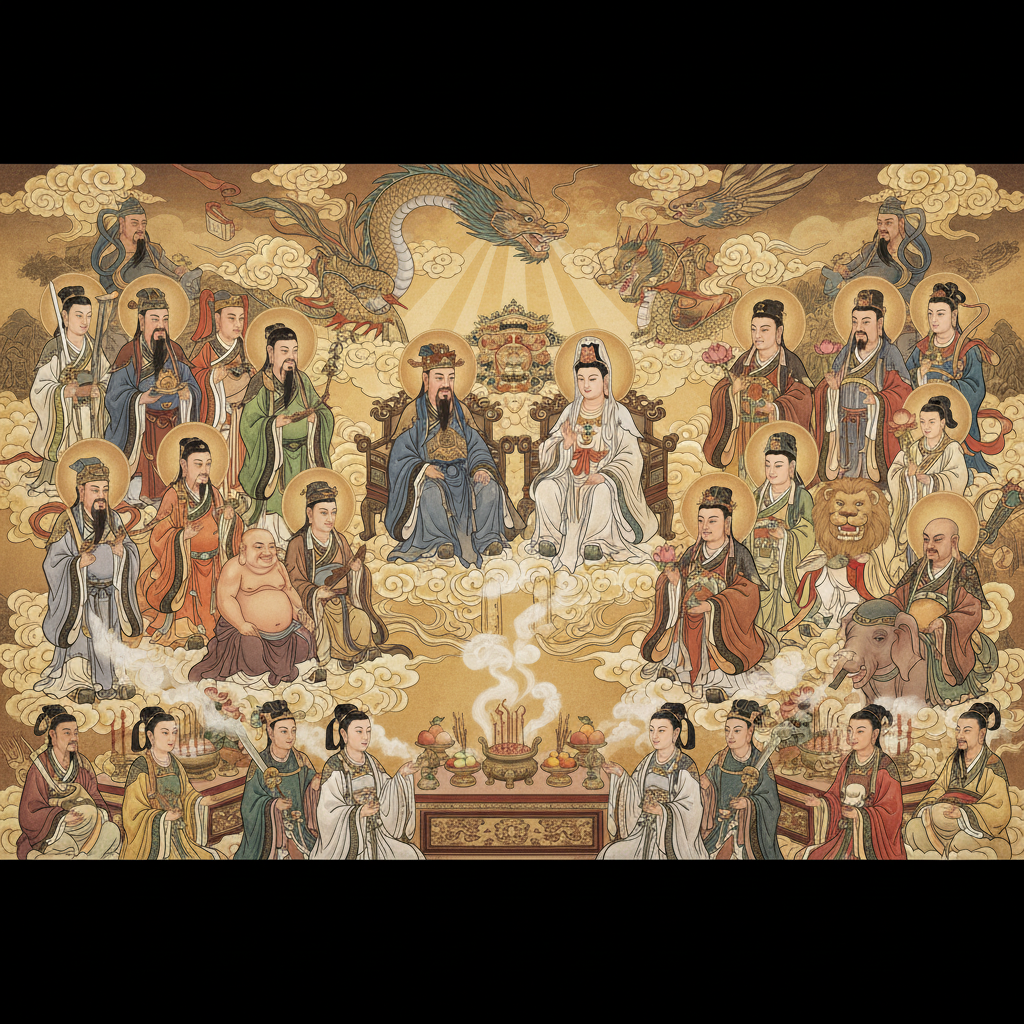
China’s rich spiritual heritage features an intricate pantheon of deities and immortals reflecting millennia of religious evolution. Rooted largely in Daoism and Buddhism, these divine figures play pivotal roles in Chinese cultural and ritual life. Unlike monotheistic traditions, the Chinese religious landscape embraces a diverse array of gods and immortals, embodying natural forces, moral virtues, and cosmic principles. Their worship involves a complex blend of folklore, philosophy, and ritual practice that continues to influence communities across China and beyond. This article explores the historical context, cultural significance, and ritual customs related to Chinese deities and immortals within Daoist and Buddhist frameworks.
Historical Context: Daoism and Buddhism’s Pantheons
Daoism, as an indigenous Chinese religion, promotes harmony with the Dao — the fundamental cosmic principle. Daoist deities often represent cosmic order, natural elements, and the quest for immortality. Many immortals, called xian (仙), are legendary figures who achieved transcendence through spiritual cultivation and alchemy. These tales date back to as early as the Han dynasty (206 BCE–220 CE), when Daoism crystallized as both philosophy and religion.
Buddhism entered China during the eastern Han period, eventually integrating with local beliefs and contributing its own saints and celestial beings to the spiritual milieu. Chinese Buddhism features bodhisattvas—enlightened beings like Guanyin (Avalokiteshvara), embodying compassion and mercy—who are widely venerated in ritual practice. Over centuries, Daoist and Buddhist cosmologies intertwined, creating a rich tapestry of deities and immortals whose roles and rituals often overlap.
Key Deities and Immortals in Ritual Practice
The Eight Immortals (Ba Xian)
Among the most beloved figures in Chinese popular religion, the Eight Immortals symbolize the ideal of transcending worldly suffering and mortality. Each immortal has distinctive attributes and symbolic tools—such as Lü Dongbin’s sword or He Xiangu’s lotus—that are invoked in rituals seeking protection, longevity, and spiritual aid. Festivals celebrating the Eight Immortals, especially on their designated birthdays, involve temple offerings, invocations, and theatrical performances recounting their legends. Their cult underscores the Daoist emphasis on self-cultivation and immortality.
Guanyin: The Bodhisattva of Compassion
Guanyin stands at the confluence of Buddhist and popular religious worship. Revered as the embodiment of compassion, her imagery appears in countless temples where devotees perform rituals demanding mercy, healing, and guidance. The Guanyin pilgrimage and chanting of her sutras are major religious practices. Historically, her worship gained widespread popularity during the Tang and Song dynasties, becoming a central figure in Chinese Buddhist rituals and syncretic religious ceremonies.
Tudi Gong and Land Deities
Local earth gods such as Tudi Gong (土地公) and Chenghuang (城隍) play crucial roles in community rituals. Tudi Gong acts as a caretaker of villages, crops, and homes, and farmers traditionally conduct offerings and incense burning at his altars for fruitful harvests and safety. These rituals exemplify the practical and communal aspect of Chinese deity worship, blending folk religion and Daoist cosmology at the grassroots level.
Ritual Customs: Offerings, Festivals, and Ceremonies
Chinese religious rituals involving deities and immortals combine elaborate ceremonies with symbolic offerings, chantings, and sometimes theatrical arts. Common offerings include incense, fruit, flowers, and symbolic foods, each carrying spiritual significance. Incense smoke is believed to communicate human prayers to the divine realm, while ritual chanting helps to purify and invoke blessings.
Festival Observances
Festivals such as the Lunar New Year, Lantern Festival, and specific immortal birthdays play key roles in ritual worship. These occasions feature temple fairs, processions, and communal prayers. During these times, ritual specialists called daoshi (Daoist priests) or bhikkhus (Buddhist monks) conduct rites designed to mediate between mortals and the divine, ensuring protection, prosperity, and spiritual health for the community.
Spirit Mediumship and Divination
In some regions, spirit mediums serve as intermediaries, channeling messages from deities or immortals. Divination methods like oracle bone readings and fortune telling using Chinese astrology or the I Ching remain important in determining auspicious dates and interpreting divine guidance. These practices, rooted in ancient Chinese cosmology, highlight the ongoing relevance of the divine pantheon in daily decision-making.
Cultural Significance and Modern Relevance
The worship of Chinese deities and immortals is more than religious devotion—it functions as a cultural anchor. These practices preserve traditional values such as filial piety, harmony with nature, and the pursuit of spiritual balance. Even as China modernizes, festivals and rituals continue to foster community cohesion and cultural identity among both rural and urban populations.
Moreover, the syncretism of Daoist and Buddhist elements encourages open spiritual expression and adaptability. Temples often house statues from both traditions side by side, and many devotees participate in overlapping rituals honoring multiple deities. This pluralistic approach typifies Chinese religiosity’s enduring flexibility and depth.
Conclusion: The Enduring Legacy of Chinese Deities and Immortals in Ritual
The pantheon of Chinese deities and immortals encapsulates collective hopes for harmony, longevity, and moral guidance, expressed through elaborate, meaningful rituals. Rooted in centuries-old Daoist and Buddhist traditions, these divine figures continue to shape spiritual and cultural life throughout China. Their worship fosters a living connection between the human and cosmic realms, illustrating how ancient mythologies and religious practices remain vibrant in contemporary society. Understanding these rituals offers profound insights into Chinese worldview and the enduring role of spirituality in everyday life.