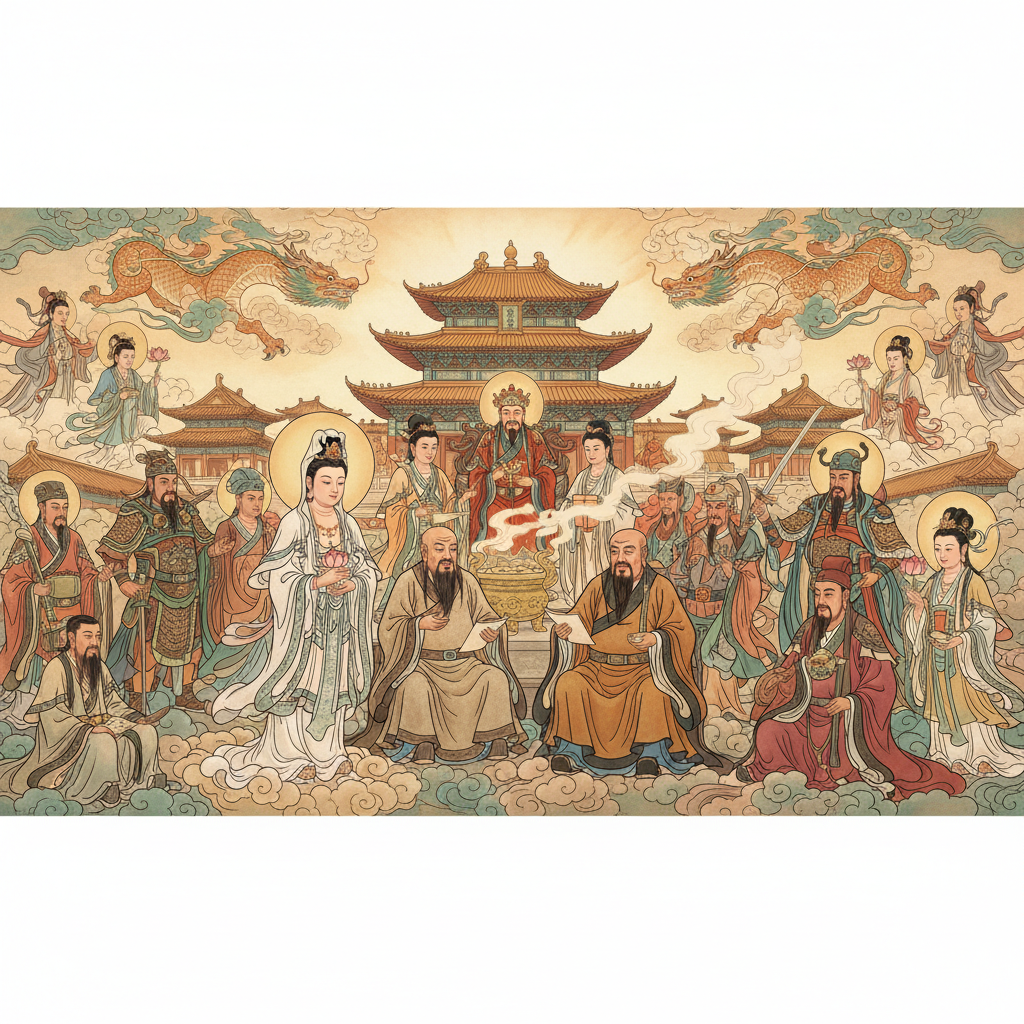
Introduction to Chinese Deities and Immortals
China's rich tapestry of cultural history is intricately woven with a diverse array of deities and immortals, primarily rooted in Daoism and Buddhism. These figures are deeply embedded in the spiritual practices and traditions of the Chinese people, often represented in ziggurat-like temples that dot the landscape, acting as conduits for worship and connection to the divine. Each deity carries its own stories, attributes, and cultural significance, helping to paint a broader picture of the beliefs that have shaped Chinese civilization.
The Historical Context of Chinese Temples
Temples dedicated to deities and immortals in China have a long-standing history, some tracing back thousands of years to the Shang and Zhou dynasties. These ancient structures were not only places of worship but also served as community centers, sites for educational and cultural gatherings, and venues for imperial rituals. Notable temples such as the Temple of Heaven in Beijing echo the significance of celestial harmony, symbolizing the emperor's role as the Son of Heaven. The architecture and artistry in these temples convey profound philosophical and spiritual messages, offering insights into the beliefs held by past civilizations.
Major Deities in Daoism and Their Cultural Significance
Daoism, one of the indigenous spiritual traditions of China, features a pantheon rich with deities and immortals. Among the most revered figures is the Three Pure Ones, who embody the central principles of Daoist philosophy. They are often depicted in temples surrounded by offerings and incense smoke, symbolizing the unity of heaven, earth, and humanity.
Another prominent deity is Guanyin, the Bodhisattva of compassion in Mahayana Buddhism, adopted into Chinese religious practice. Represented as a figure of mercy and love, Guanyin temples across China attract those seeking solace and healing. The reverence of Guanyin highlights the intersection of Buddhist and Daoist beliefs, illustrating a syncretic relationship within the Chinese spiritual landscape.
Immortals of the Eight Immortals: Legends and Roles
The Eight Immortals (Ba Xian) are a celebrated group in Chinese folklore, each representing different aspects of life, such as wealth, wisdom, and health. Their widespread popularity can be traced back to the Ming and Qing dynasties, and they have since been depicted in countless artworks and performances.
A notable immortal among them is Zhang Guolao, often portrayed as an elderly man riding a donkey backward. He embodies the principles of unconventional wisdom and the idea that age can bring a unique perspective. His presence in temples serves as a reminder of the joys of aging and the freedom of the spirit. The teachings associated with each of the Eight Immortals contribute richly to Chinese cultural narratives, making their stories a cherished part of temple lore.
Temples as Centers of Community and Worship
Chinese temples dedicated to deities and immortals serve multiple roles within their communities. They act as spiritual sanctuaries where individuals come to seek blessings and guidance. Rituals such as offerings, prayers, and festivals are essential components of temple life, fostering a sense of community and shared identity.
Festivals like the Lantern Festival and the Birthday of the Guanyin draw large crowds to temples, transforming them into vibrant centers of celebration and spiritual homage. These events are deeply imbued with cultural rituals that preserve and perpetuate traditional beliefs, allowing younger generations to connect with their heritage and ancestry.
The Syncretism of Beliefs: A Cultural Mosaic
The fusion of Daoism, Buddhism, Confucianism, and folk beliefs has created a complex spiritual landscape in China. Temples dedicated to differing deities often coexist in harmony, symbolizing a cultural mosaic that allows for personal interpretation of spirituality. This syncretism highlights the fluidity of beliefs and the adaptability of traditions to meet the evolving needs of society.
For instance, the Confucian temple can often be found adjacent to a Daoist or Buddhist temple, illustrating a mutual respect for varying philosophies. Visitors can observe how worship practices and offerings seamlessly blend, reflecting a shared reverence for the divine regardless of the specific tradition.
Conclusion: The Enduring Legacy of Chinese Deities
Chinese deities, immortals, and their corresponding temples encapsulate a rich cultural heritage that continues to flourish today. These sacred spaces not only represent a connection to the divine but also serve as historical landmarks that tell stories of belief, community, and cultural evolution. As the world becomes increasingly globalized, the significance of these deities and their temples remains a vital part of preserving China's unique spiritual identity. Engaging with these traditions invites a deeper understanding of the intricate tapestry that forms the foundation of Chinese culture, making it crucial for future generations to honor and celebrate this legacy.