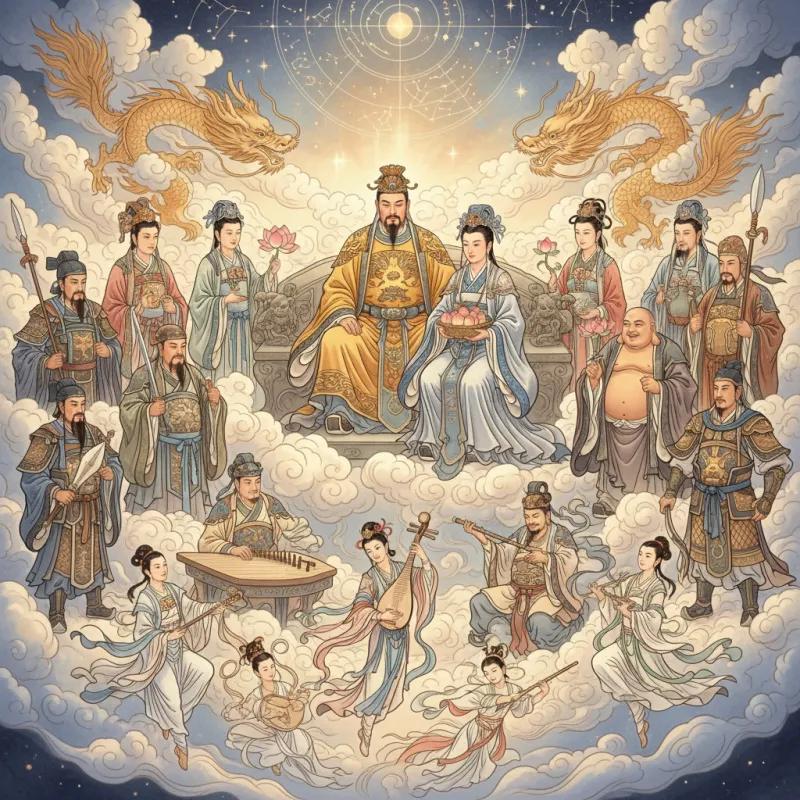
The incense smoke curls upward in thick ribbons, carrying prayers to gods whose painted eyes follow you across the temple hall. You've stepped over the threshold—carefully, because someone whispered you shouldn't step on it—and now you're standing there, awkward and uncertain, while elderly worshippers move through their rituals with practiced ease. You want to be respectful, but you have no idea what you're doing. Welcome to every first-timer's experience at a Chinese temple.
The Threshold Is Not Just a Doorway
That raised wooden beam at the entrance? It's called the ménkǎn (门槛), and in traditional belief, it separates the sacred from the mundane. More importantly, deities and spirits are believed to rest on it. Stepping on the threshold is like stepping on the gods themselves—a spectacular way to announce yourself as ignorant or disrespectful.
Always step over it. High step if you must. If you're entering with elderly relatives or people with mobility issues, most temples have side entrances or ramps that bypass the main threshold entirely. Use those. The threshold rule applies to every doorway within the temple complex, not just the main gate.
And here's something most guides won't tell you: when you step over, enter with your left foot first if you're entering through the left door, right foot first through the right door. The center door? That's traditionally reserved for deities, high-ranking monks, or imperial officials. In practice, many temples don't enforce this strictly anymore, but older worshippers will notice if you stride through the center like you own the place.
What to Wear (and What Absolutely Not to Wear)
Chinese temples aren't as strict as some religious sites—you won't be turned away for showing your ankles—but there's a baseline of respect expected. Cover your shoulders and knees. This applies regardless of gender. Tank tops, short shorts, and mini skirts mark you as either ignorant or deliberately disrespectful.
Remove hats, sunglasses, and anything covering your face once you're inside. The logic is straightforward: you're in the presence of deities. Would you wear sunglasses to meet someone's grandmother? The gods deserve at least that level of courtesy.
Avoid clothing with skulls, demons, or aggressive imagery. I once watched a temple keeper politely but firmly ask a tourist to turn his heavy metal band shirt inside out before entering the main hall. The shirt featured a graphic demon design. In a space dedicated to protection from malevolent spirits, this was roughly equivalent to wearing a "I Love Burglars" shirt to a police station.
Shoes stay on in most Chinese temples, unlike many Buddhist temples in Southeast Asia. The exception: if you see a pile of shoes at a doorway or a sign requesting removal, follow suit. Some meditation halls and living quarters require shoe removal.
The Incense Ritual: More Than Just Lighting Sticks
Incense (xiāng, 香) is the primary offering in Chinese temples, and there's a specific way to do it. Most temples provide free incense at the entrance—three sticks is standard, representing respect to heaven, earth, and humanity (or Buddha, Dharma, and Sangha in Buddhist temples, or various trinities in Daoist contexts).
Light all three sticks together from the temple's main burner or designated candles. Never use a lighter directly if there's a communal flame available—you're joining a continuous chain of prayer that may have burned for decades or centuries. If your incense goes out, relight it from the communal source, not from scratch.
Hold the incense with both hands at chest or forehead level, sticks pointing upward. Bow three times—to heaven, earth, and humanity, or to the Buddha and bodhisattvas, depending on the temple's tradition. Some worshippers bow to each of the four directions, acknowledging all deities and spirits present.
When placing incense in the burner, insert all three sticks together, upright. Don't toss them in carelessly or leave them at angles. The incense burner is not a trash can. If the burner is overflowing (common during festivals), temple staff will indicate where to place offerings.
Here's what tourists often get wrong: they treat incense like birthday candles, making wishes while waving the sticks around. The incense is an offering and a signal of respect, not a magic wand. Your prayers come after, during the bowing, not during the lighting.
How to Pray (Even If You Don't Believe)
You don't need to believe in Chinese deities to pray respectfully at a temple. Think of it as participating in a cultural practice, like removing your shoes in someone's home. The gesture matters more than your internal conviction.
Stand or kneel before the altar. Most temples have cushions (pútuán, 蒲团) for kneeling, though standing is equally acceptable. Place your palms together at chest level in the prayer position (hézhǎng, 合掌), fingers pointing upward.
Bow three times. A proper bow means bending at the waist, not just nodding your head. If you're kneeling, you may perform a full prostration—forehead touching the ground, arms extended. This is the highest form of respect, typically reserved for major deities or when making serious prayers. Don't feel obligated to prostrate if you're just visiting; three standing bows are perfectly respectful.
What do you say? If you're a believer, pray as you normally would. If you're not, a simple mental acknowledgment works: "I respect this sacred space and the traditions practiced here." Some visitors offer general well-wishes for peace, health, or safety—universal hopes that transcend specific religious beliefs.
Move from altar to altar if the temple has multiple deity halls. Each deity receives their own greeting. The main hall typically houses the primary deity—Guanyin (观音), the Jade Emperor (玉皇大帝), or Buddha, depending on the temple's tradition. Side halls may honor local deities, historical figures, or specialized gods like Caishen (财神), the god of wealth, or Wenchang (文昌), the god of literature.
The Unwritten Rules Nobody Tells You
Don't point at statues or deities. Gesturing is fine, but direct pointing is considered rude, as if you're singling them out for criticism. If you need to indicate a specific statue, use an open palm gesture instead.
Photography policies vary wildly. Some temples welcome it; others forbid it entirely, especially in main halls or during ceremonies. When in doubt, ask. If photography is allowed, never use flash on statues or altars—it's disrespectful and damages painted surfaces over time. And absolutely never take selfies with your back to the altar or deities. This is shockingly common among tourists and deeply offensive to worshippers.
Don't touch offerings unless you placed them yourself. That fruit, those flowers, the plates of food—they belong to the gods now. Taking them is literally stealing from deities. Some temples redistribute offerings to visitors after ceremonies, but wait for explicit permission.
Keep your voice down. Temples are not museums. People are actively praying, meditating, seeking solace. Your conversation about lunch plans can wait until you're outside.
If you're visiting during a festival or ceremony, stay to the sides and back. Don't push forward to get a better view or photo. Worshippers have priority. If monks or priests are performing rituals, maintain a respectful distance unless invited to participate.
Fortune Sticks, Divination, and Other Practices
Many temples offer fortune-telling through jiǎobēi (筊杯) or qiúqiān (求签)—divination blocks and fortune sticks. These aren't tourist attractions; they're genuine religious practices. If you're curious, participate respectfully or not at all.
For fortune sticks: kneel before the deity, ask your question clearly (in your mind or aloud), shake the container until one stick falls out, then verify the answer using the divination blocks. The blocks are thrown three times—if they land with one flat side up and one curved side up, the deity confirms your fortune. If both land the same way, shake again for a different stick.
Take your fortune slip to the temple office or designated interpreter. These fortunes are often written in classical Chinese and require explanation. Don't just grab a stick, snap a photo, and leave. That's treating a religious practice like a carnival game.
Some temples charge small fees for fortune-telling or blessing services. This isn't a scam—it's how many temples fund their operations and community services. If you participate, pay the requested amount. If you're just visiting without participating in paid services, consider leaving a donation anyway. Temple maintenance isn't free.
When You're Ready to Leave
Exit the same way you entered—step over thresholds, don't step on them. Some traditions suggest leaving through a different door than you entered, symbolizing transformation or completion of your visit, but this isn't universal.
If you lit incense, your sticks will still be burning in the burner. Don't try to retrieve them or extinguish them. They'll burn down naturally, carrying your prayers upward until the last ember fades.
Before you leave the temple grounds entirely, many worshippers perform a final bow toward the main hall, a last gesture of respect. You don't have to, but it's a graceful way to close your visit.
The Real Point of Temple Etiquette
None of these rules exist to make you feel unwelcome or to gatekeep Chinese religious spaces. They exist because temples are living, active places of worship, not historical museums. The elderly woman kneeling before Guanyin, praying for her sick grandson—she's not performing for tourists. The young man burning incense for his deceased father—he's not there for your Instagram story.
Temple etiquette is about recognizing that you're a guest in someone else's sacred space. You don't need to believe in Chinese deities to respect the people who do. You don't need to understand every ritual to participate thoughtfully. You just need to pay attention, follow the basic rules, and remember that respect is a universal language.
Whether you're exploring Chinese deity worship practices out of genuine spiritual interest or simply visiting temples as part of cultural tourism, these guidelines will help you navigate the experience without causing offense. And if you make a mistake—step on a threshold, forget to bow, accidentally point at a statue—don't panic. Acknowledge the error, correct it if possible, and move on. The gods, according to tradition, appreciate sincere effort more than perfect execution. The worshippers around you will likely appreciate it too.
For those interested in deepening their understanding, learning about the different types of Chinese temples can provide valuable context for the varying practices you might encounter across different religious traditions.
Related Reading
- The Chinese Religious Calendar: When to Worship What
- Setting Up a Chinese Home Altar: A Practical Guide
- How to Pray at a Chinese Temple: A Practical Guide
- A Practical Guide to Visiting Chinese Temples: What to Do and What Not to Do
- Exploring Chinese Deities and Immortals: Rituals in Daoist and Buddhist Traditions
- Unveiling the Rich Tapestry of Chinese Deities and Immortals
- The Dragon Kings of the Four Seas